The Facts Are Clear: The New Iran Deal Is a Vast Improvement
Trump signed MOU Treaty of Versailles 2: Electric Boogaloo last night in France, supposedly with Iran as a counterparty. Trump recently deleted Iran’s leadership from the census, posted its navy in a new mission as a future coral reef, tragically removed the last of its F-14s, and ground its shadow economy to a halt. Iran, for its part…did nothing. So they’ll sign what they’re handed, for the most part.
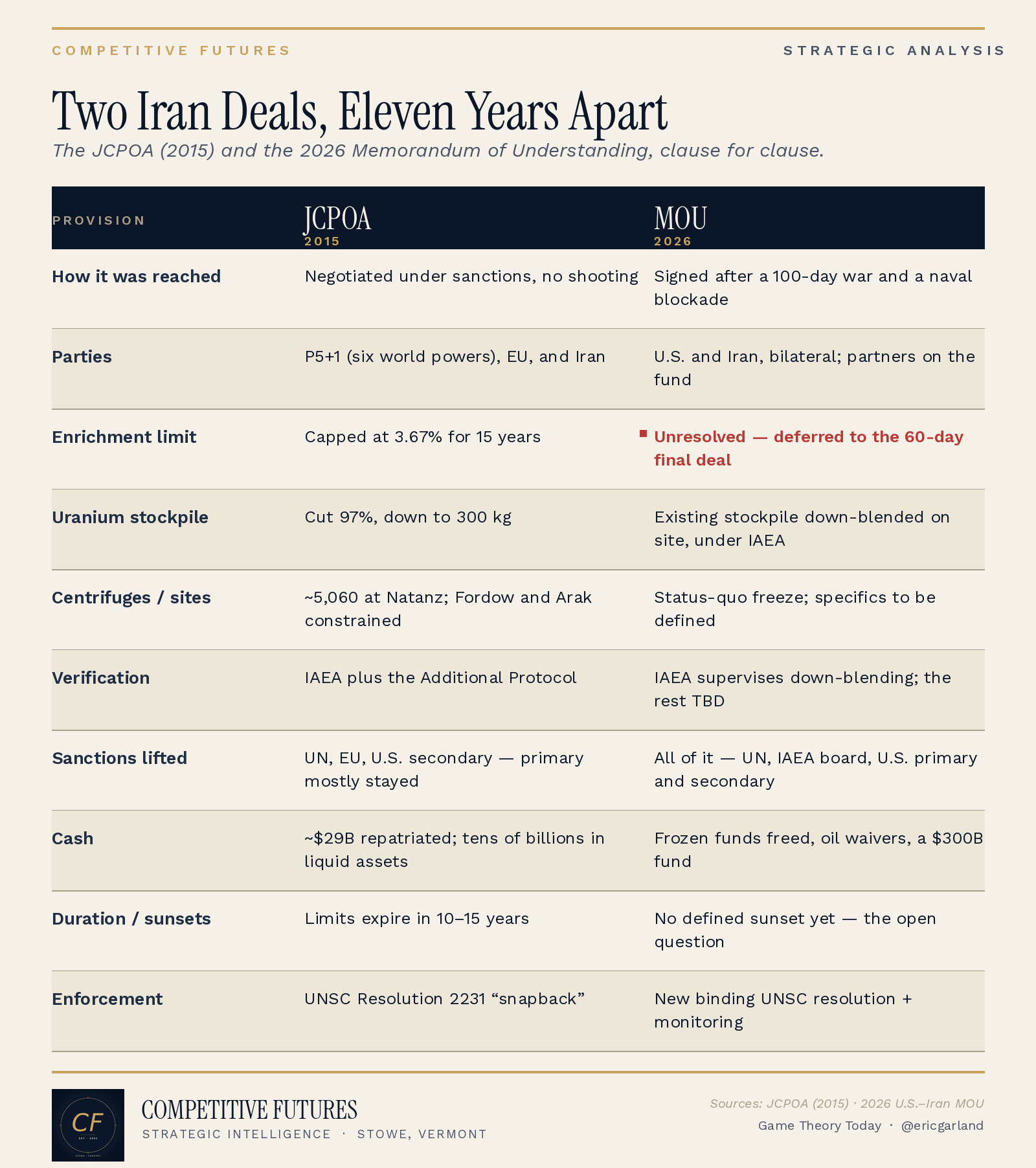
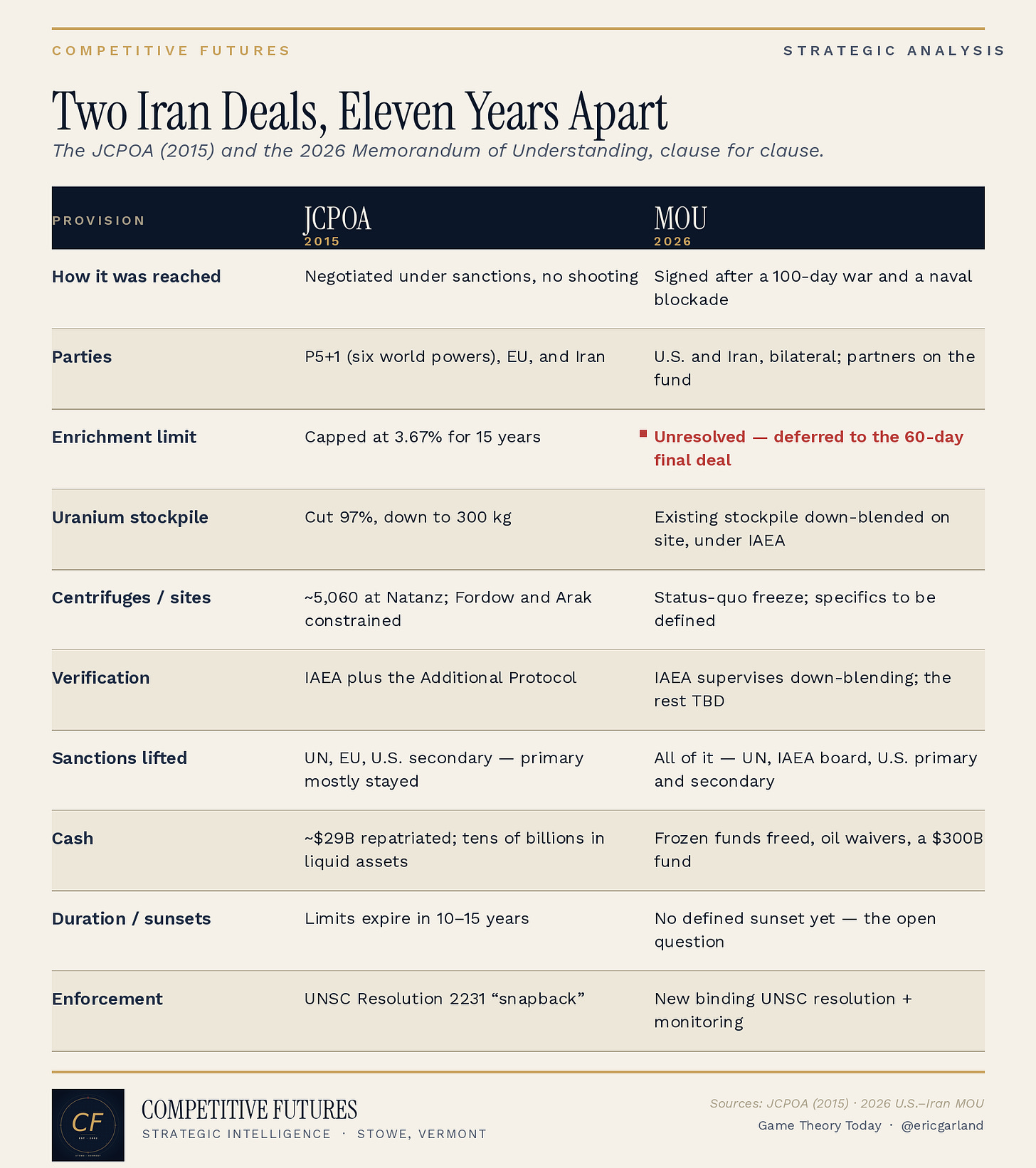
Now, the Very Serious Washington People were determined before the news broke that whatever Trump signed would be wrong. Or at least it would be The Same, And At Great Expense All For Nothing. So I thought I would be really pedantic and go back and compare the two deals, since my intelligence firm actually deals in what we refer to as “facts” so we can engage in “analysis.”
I think JCPOA and its aftermath can be safely described as ineffective. None of us have access to discussable Top Secret information about the true status of the Fordow facility when Operation Midnight Hammer struck it last year. I’m going to take a chance and assume that it housed nuclear capabilities in violation of the multilateral treaty. At the very least, let us assume that JCPOA was necessary because Iran sought nuclear weapons and that the 2025-2026 war was necessary because Iran got closer to their possession. Let us then look at the MOU’s constraints on Iran to see if the military operation has reduced Iran’s overall capabilities, thus reducing them as a regional and global threat.
The uranium issue alone is the headline. Under JCPOA, you have to cut down the amount of uranium, under MOU you have to sit there and down-blend it to harmless while the world watches.
Under JCPOA, Iran still kept some centrifuges. Under MOU, we blew them up with B-2 bombers, and they can’t get any new ones.
Under JCPOA, Iran still kept its pariah status—which China ignored and bought their oil anyway. Under MOU, the sanctions are off, pursuant to Iran presumably taking a new path in the world order.
The most important facet here is who’s signing the deal. JCPOA involved the EU and multiple allies, all with different political calculus at any given time. The MOU is just Iran and the U.S. If this President, or some future President, finds Iran in breach, the deal is off and we put warheads on foreheads.
The idea that this is just like the status quo, or a sweetheart deal for Iran, or Trump “folding” is asinine. Factually, the Trump Administration and the Department of War changed the balance of power in the Middle East permanently. Iran is no longer a pariah state hegemony threatening all its neighbors. Their military is wasted, their economy is in shambles, and their capabilities around advanced weapons have been degraded. Yes, enrichment is still on the table — that’s the one fight left, and it’s being fought from Iran’s knees, not 2015’s standing.
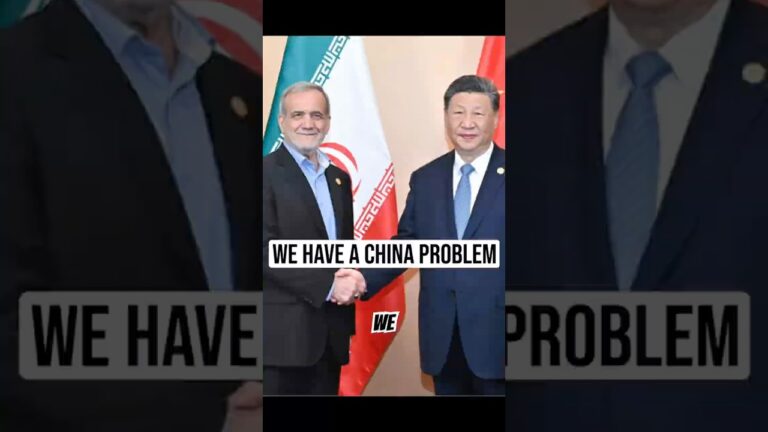
Moreover, the whole affair has proven Moscow and Beijing are not good boyfriends—they will leave you as soon as times get tough. So this is a lesson to all other roguish nations around the world—the United States is the sole megapower, and the BRICS are about as useless as the screen door on a submarine if America decides to act unilaterally.
Next to test this theory will be Cuba. If they’re smart, the boys in Havana will see that Moscow and Beijing will not be rescuing them, that Trump and Rubio are quite serious, and that if Hegseth gets involved, it won’t go well. The smartalecky comments about 66% of the guys mentioned having been TV personalities don’t subtract from the logic.
If this doesn’t seem like the United States advanced its interests at a reasonable cost, you may not be doing much analysis of the facts. It’s a helluva lot better than what Obama got us.
First published on Game Theory Today (Substack), June 18, 2026.
Related analysis from Competitive Futures
- Seventy Countries, Six Cities: The Global Network Behind Iran — the network behind the regime that signed
- How to Think About Iran Negotiating with Trump — reading the negotiation as a game
- NO NUKES FOR YOU — the real story of the Iran Deal — the short version, on video
Want this kind of analysis for your organization? Contact Competitive Futures or learn more about Eric Garland.
About Competitive Futures
Competitive Futures has provided strategic intelligence and foresight to corporate and government clients since 2002. Its principal, Eric Garland, publishes analysis here, on Game Theory Today, and in the Systemics Quarterly Brief.
Read next
- Seventy Countries, Six Cities: The Global Network Behind Iran
- The Systemics Quarterly Brief: 2026 Prospectus
- Strategic intelligence services for executives and governments
- All analysis from Competitive Futures
Stay in touch
Leave your email and a note about the Brief, a briefing for your team, or this piece, and we will be in touch.