Scenario Planning: How to Build Scenarios That Change Decisions

You can hand a senior executive a list of five trends that will reshape her industry, and she will nod, file it with everything else on her desk, and go back to this quarter’s launch. Hand her a one-paragraph story about a specific morning in 2032, built from the same five trends, and she will start asking questions. That is the whole case for scenario planning. Scenarios turn research about the future into something people remember, argue about and act on.
What scenario planning is
Scenario planning is the practice of building several plausible, detailed stories about how the future could unfold, and using them to test today’s decisions. Each scenario combines the same research (trends, expert forecasts and their implications) in a different way, so that leaders can see how a plan holds up in more than one future.
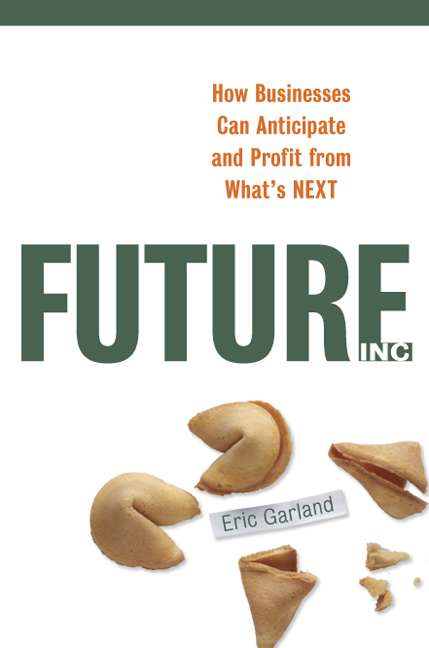
In Future, Inc. (AMACOM, 2007), I credited the idea of alternative futures to Herman Kahn of the RAND Corporation, who used scenarios to think through nuclear war with the Soviet Union. The most famous corporate use came a generation later. In 1971 and 1972, Pierre Wack and Ted Newland, planners at Royal Dutch Shell, concluded that political change in the Arab world would destabilize the oil market, and they warned Shell’s managing directors that oil could rise from about $2 a barrel to as much as $10. Shell prepared, and when the 1973 oil shock came it moved from a relatively weak position to become one of the industry’s two breakout leaders (strategy+business).
Why stories beat lists

The book makes the argument plainly: “Stories are the most powerful communication tool we have.” A list of trends is abstract. A scenario puts people inside the trends, making decisions under the constraints of a different world, and the reader starts to ask the questions a strategist should be asking. How bad does it get? When does it start? Who wins?
In the book, I turned a dry list of health care trends (rising costs, retiring Baby Boomers, a growing Indian middle class, cheaper diagnostic equipment connected to the internet) into a short scenario set in 2013, in which American clinics used “telemedical” diagnostic machines and sent routine primary-care work to doctors abroad. Telemedicine did arrive, though not the way that story imagined. Medicare telehealth visits went from about 840,000 in 2019 to 52.7 million in 2020, a 63-fold increase, according to the Department of Health and Human Services (CMS). The driver was a pandemic, not a budget crisis, and the doctors stayed mostly domestic. That is exactly what scenarios are for: the story got leaders thinking about remote diagnosis years early, without pretending to know which force would trigger it.
Never build just one
The most common mistake in scenario planning is to write one future and call it a plan. As I put it in Future, Inc., “to pretend that there is one future more likely than any other is very dangerous.” The worst version is the comfortable one, the vision-statement future in which your company masters every challenge and buries every rival. Nobody gets in trouble for pinning that one up in the break room, and it is useless. In my satirical second book, How to Predict the Future…and WIN! (2011), “Plan based on a single scenario” is one of the twenty-five worst practices.
A useful set includes futures you would like, futures you would hate, and at least one that sounds a little crazy.
Why four scenarios work best
The number of scenarios changes how people react to them. The reasoning from the book still holds:
- Two creates a football-match mentality: our side or theirs.
- Three lets people choose the middle, an often falsely moderate position.
- Five or more becomes hard to follow.
- Four, as I wrote, “is perfect because it gives a range of possibilities with no middle option.”
The Impact/Probability Matrix
A quick way to build four distinct scenarios is to sort them by how likely they are and how much they would disrupt you:
- Flash in the pan (low probability, low impact): the change blows over. Overreacting would waste energy.
- Business as usual (high probability, low impact): the change arrives and you adjust without fundamental pain.
- The brewing storm (high probability, high impact): you can see it coming, and it is a real problem.
- Wild card (low probability, high impact): unlikely, but devastating if you are unprepared. The collapse of the Soviet Union was a wild card in 1985.
The method is explained in detail in this guide to the Impact-Probability Matrix.
A scenario set that came true
In the mid-2000s, after controversies over hidden drug-trial data, we used the matrix in a project on the future of pharmaceutical regulation to explore one question: how much clinical-trial disclosure would governments require? The four scenarios were a False Alarm (the scandal fades), Self-Regulation (companies police themselves and Washington stays out), Government Regulation (new rules force transparency) and Total Disclosure (everything a company does goes into a public database).
Government Regulation is the one that arrived. Congress wrote registration and results reporting for many clinical trials into federal law, and in September 2016 the Department of Health and Human Services issued a final rule spelling out the requirements to submit summary results to ClinicalTrials.gov, effective January 2017 (RAPS). A company that had prepared for that scenario a decade earlier had nothing to scramble for.
How to build scenarios, step by step
- Frame the question. Decide whether you need broad scenarios (where is our whole market going in twenty years?) or focused ones (what happens to our business if a specific regulation passes?). Focused questions get faster action; broad ones change long-term positioning.
- Gather the inputs. Scenarios are only as good as the research behind them: a systems map, real trend data, evaluated expert forecasts, and the implications you worked out with tools like the Futures Wheel.
- Pick four driving trends and use them in every scenario. The book’s rule was to make sure the same trends appear in each story, so the scenarios rest on research rather than on someone’s creative writing.
- Sort the futures into four. Use the Impact/Probability Matrix or two key uncertainties to make the four genuinely different.
- Write each one about people. Show what is normal in that future. Futurist Joe Coates used to imagine the burglar of the future: how does he get into the house, what does he steal, how likely is he to get caught? Answering forces you to think through every trend at once. Give each scenario a memorable name.
- Find the signposts. For each scenario, list the early, observable events that would tell you it is arriving: a bill introduced, a price threshold crossed, a competitor’s hire. Those become your monitoring list.
- Test your strategy against all four. A good plan survives in most of them. A plan that works in only one is a bet, and you should know you are making it.
Making scenarios come alive
Scenarios work best when people step inside them. The book describes a workshop in which executives from a semiconductor company each role-played a person somewhere else in the world. The most conservative man in the group drew the card for a 14-year-old boy from a devout Muslim family in Qatar, and by the end of the exercise he was explaining, convincingly, how that boy would weigh a job with a Western company against his duties to family and faith. No trend report could have done that.
The other trick is to remember that people in the future will not think like you. In How to Predict the Future…and WIN!, the satirical tip is “Assume that future generations will share your values, biases, superstitions and desires.” Your grandparents would find much of today’s normal life strange. Your grandchildren will feel the same about yours.
Frequently asked questions
What is the difference between scenario planning and forecasting?
A forecast says what will happen by a certain date. Scenario planning describes several things that could happen, so that you can prepare for more than one future instead of betting on a single prediction.
How many scenarios should you build?
Four is the most useful number for most organizations: enough to show a real range, with no middle option for people to settle on.
Who invented scenario planning?
Herman Kahn developed modern scenario methods at the RAND Corporation in the 1950s, and Pierre Wack and his colleagues made them famous in business at Royal Dutch Shell in the early 1970s.
Related reading
- The Impact-Probability Matrix for scenario planning
- Strategic Foresight: A Practitioner’s Guide to Seeing What’s Coming
- The Futures Wheel: How to Map the Second- and Third-Order Effects of Change
Competitive Futures builds scenarios and runs scenario workshops for companies and governments; details are on the services page.