The 18 U.S. Intelligence Agencies: A Complete Guide

How well do you know the intelligence agencies of the United States?
Whether you run a business, a government agency, or want a career in intelligence, knowing all the agencies is important. Go from the oldest–U.S. Army Intel–to the most secretive [SHH]–to the newest, ODNI.
This video will tell you everything you need to know about the 18 American intelligence agencies.
Updated October 2026. The video above was recorded in 2023. The written guide below is current to the Intelligence Community’s membership as of fall 2026. Agency leaders change often, so names of directors are left out; ODNI keeps the official roster.
How many intelligence agencies does the United States have?
The United States has 18 intelligence agencies, formally called the elements of the Intelligence Community (IC). Two are independent agencies. The other 16 sit inside six cabinet departments (ODNI; Congressional Research Service, IF10525):
- Independent (2): Office of the Director of National Intelligence (ODNI) and Central Intelligence Agency (CIA)
- Department of Defense (9): DIA, NSA, NGA, NRO, and the intelligence elements of the Army, Navy, Marine Corps, Air Force and Space Force. (Since 2025, the department may also use the secondary title “Department of War.”)
- Department of Homeland Security (2): Office of Intelligence and Analysis, and Coast Guard Intelligence
- Department of Justice (2): the FBI and the DEA’s Office of National Security Intelligence
- Department of State (1): Bureau of Intelligence and Research
- Department of Energy (1): Office of Intelligence and Counterintelligence
- Department of the Treasury (1): Office of Intelligence and Analysis
They are not one organization. Each has its own legal mandate, its own specialty, its own culture and, frequently, its own grudges against the others. ODNI is often described as the agency “to rule them all,” but it does not really rule them. Its job is to coordinate them, help them get along, and publish the President’s Daily Brief.
What is an intelligence agency?
An intelligence agency is an institution that operates under the law to collect information, interpret it, and turn it into products for customers in government.

And what is a product? Spoiler alert: it is probably a written document, produced by some nerd. It is the encapsulation of a story built from a variety of secret sources and methods. That story might depend on satellite images, intercepted communications, or what a human source told us. At the end of the day, it is a story a decision-maker can rely on when it matters most.
The customers are a small group of people with very serious decisions to make. The two most famous are the President and the Joint Chiefs of Staff:
- The President’s Daily Brief (PDB). Every morning the President receives a product that draws on the whole Intelligence Community and is coordinated by ODNI. Whatever matters most that day goes to the White House and is shared with a very small number of people.
- The military. When the armed forces have to do their job, they need the best possible information about the battlefield and the adversary.
- Everyone else with a need to know. Other federal agencies, and in limited cases state and local officials, receive intelligence about national security threats in their territory.
What makes the U.S. Intelligence Community different?
It is the best funded in the world, probably. Much of the spending is classified, but since 2007 the government has been required to disclose the total appropriated for the National Intelligence Program each year. The United States is the richest economy and the largest military power that has ever existed, and it funds 18 agencies. It is safe to assume it is number one.
It actually cares about civil liberties. Decades of hostile disinformation trained many people to assume anything the U.S. does to protect itself is nefarious. In reality, American intelligence agencies are among the few in the world that operate under detailed rules about the privacy of their own citizens. Many services, including some of our closest allies’, will collect whatever they need on their own soil. In the U.S., when agencies break the rules it becomes a scandal, and Congress has standing oversight committees, the Senate Select Committee on Intelligence (1976) and the House Permanent Select Committee on Intelligence (1977), to watch them. That makes the American system a model, imperfect as it is.
What is classified intelligence?
Every agency has sources and methods it keeps secret, sometimes even from the other agencies. Some information comes from technologies adversaries do not know we have. Some comes from human sources whose lives depend on not being exposed. So both the methods and the results are protected under the classification system.
There are three levels, defined in Executive Order 13526 by how much damage unauthorized disclosure could reasonably be expected to cause to national security:
- Confidential: damage
- Secret: serious damage
- Top Secret: exceptionally grave damage
How do you get a security clearance?
Generally, if handling classified information is not part of your job, you do not get access. Do not try. If it is, you need a security clearance, which usually starts with a job offer from the government or a cleared contractor.
You will fill out Standard Form 86, listing nearly every fact about yourself: where you have lived, your finances, your family, your friends, your foreign contacts. For the highest levels, investigators then conduct what was long called a Single Scope Background Investigation, reaching your family, friends, neighbors, employers and pretty much everywhere you have been.

It sounds invasive, and to a degree it is. But they are mainly looking for a few things:
- Serious debt that someone could exploit
- Behavior you would be embarrassed by, and could be blackmailed over, if it came out
- Drug dependencies that could be used as leverage
- Foreign contacts that rise to a level of concern
Context matters. If you grew up near the Canadian border and have hockey friends in Ontario or Quebec, that is probably not a big deal. If you became close friends with the son of a foreign intelligence chief and visit him twice a year, that is a different conversation.
Who works at an intelligence agency?
The movies have given people the wrong idea. I regret to inform you that the workforce is roughly 99 percent dorks and, at most, one percent anything resembling an action hero. In 30 years in the intelligence world, I have rarely had to wear a tuxedo, and I have never gone hang gliding with a laser gun. If anyone knows where to apply for that job, let me know.
The 18 U.S. intelligence agencies
Starting with the umbrella agency, then the CIA, then each department’s elements.
1. Office of the Director of National Intelligence (ODNI)
Founded: created by the Intelligence Reform and Terrorism Prevention Act of 2004; began operations April 22, 2005. Headquarters: McLean, Virginia. Mission: leads and coordinates the Intelligence Community, oversees the National Intelligence Program, and publishes the President’s Daily Brief. In practice, it is in charge of herding cats across 17 very different cultures.
2. Central Intelligence Agency (CIA)
Founded: 1947, by the National Security Act. Headquarters: Langley, Virginia. Mission: collects foreign intelligence, especially from human sources, produces all-source analysis, and conducts covert action when the President directs it. It is the most famous of the 18, and the one that most openly says, “we do spy stuff.”
3. Defense Intelligence Agency (DIA)
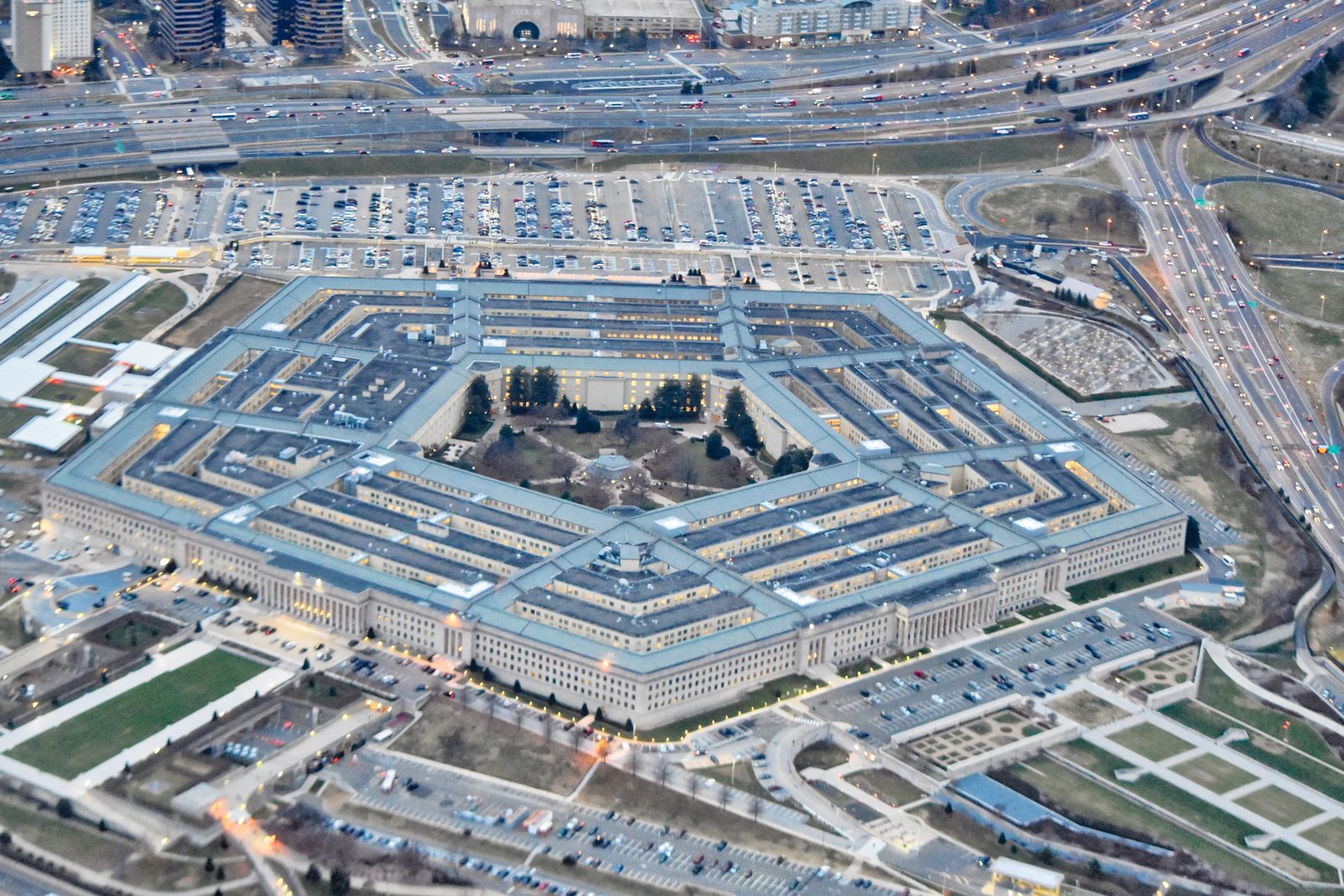
Founded: 1961. Headquarters: Joint Base Anacostia-Bolling, Washington, D.C. Mission: produces and disseminates military intelligence for combat and non-combat missions, and conducts intelligence, surveillance and reconnaissance. It is much bigger than most people, including many intelligence professionals, realize.
4. National Security Agency (NSA)
Founded: November 4, 1952, though the government barely acknowledged it for decades, hence the nickname “No Such Agency.” Headquarters: Fort Meade, Maryland, the famous “Puzzle Palace.” Mission: signals intelligence and cybersecurity. If it plugs in and does anything, NSA can probably learn about it.
5. National Geospatial-Intelligence Agency (NGA)
Founded: renamed NGA in 2003 from the National Imagery and Mapping Agency, which had consolidated imagery and mapping work in 1996. Headquarters: Springfield, Virginia, with a second major campus in St. Louis, Missouri. Mission: geospatial intelligence “from the seabed to space”: imagery, maps and the analysis of where things are and what they are doing. Fun fact: “geospatial intelligence” is two words, but every big agency has three letters, so NGA it is. One of the unsung heroes of the intelligence world.
6. National Reconnaissance Office (NRO)
Founded: 1961, but its existence was not publicly acknowledged until 1992. Headquarters: Chantilly, Virginia. Mission: designs, builds, launches and operates the nation’s reconnaissance satellites. There is not much more available. I may have said too much.

7. Army Intelligence
Founded: the oldest, tracing its roots to intelligence work George Washington organized in 1776. Headquarters: Army Intelligence and Security Command (INSCOM) at Fort Belvoir, Virginia; the Army’s senior intelligence officer is the G-2. Mission: all-source intelligence, security operations, linguist support and specialized capabilities for Army, joint and coalition commands. It is the biggest of the military intelligence services, and it does the most.
8. Navy Intelligence (Office of Naval Intelligence)
Founded: 1882, originally to track foreign navies’ adoption of new technology such as steam power. Headquarters: Suitland, Maryland. Mission: maritime intelligence for strategic, operational and tactical decision-makers. ONI is one of the oldest and coolest. Much of my own approach to technology and trend analysis comes from mentors who started at ONI.
9. Marine Corps Intelligence
Headquarters: Marine Corps Base Quantico, Virginia. Mission: intelligence that helps Marines fight and win, faster and more efficiently than the enemy. Marines will not take that description personally. It is also true. Hoorah.
10. Air Force Intelligence
Headquarters: Joint Base San Antonio, Texas. Mission: global intelligence, surveillance and reconnaissance, cyber and electronic warfare, and information operations. Air Force intelligence also serves as the Air Force’s cryptologic component working with NSA and U.S. Cyber Command.
11. Space Force Intelligence
Founded: the newest member, joining the Intelligence Community in January 2021. Its National Space Intelligence Center, Space Delta 18, was activated in 2022. Headquarters: Wright-Patterson Air Force Base, Ohio, under Space Operations Command, which is abbreviated, I am not making this up, SpOC. Mission: intelligence on foreign space and counterspace threats, protecting the satellites the rest of the community depends on. It sounds like something out of a comedy. It is a very big deal.
12. Department of Energy Office of Intelligence and Counterintelligence
Headquarters: Washington, D.C. Mission: protecting the nukes. It gives decision-makers intelligence on foreign nuclear programs and energy security, and catches spies trying to get at nuclear secrets, especially ours.
13. Department of Homeland Security Office of Intelligence and Analysis (I&A)
Founded: with the Department of Homeland Security, created in 2002. Headquarters: Washington, D.C. Mission: shares intelligence with state, local, tribal, territorial and private-sector partners, and develops intelligence from them for the rest of the community. It is the element most focused on getting national intelligence to state and local officials.
14. Coast Guard Intelligence
Founded: the Coast Guard traces its origins to Alexander Hamilton and 1790; Coast Guard intelligence joined the Intelligence Community after 2001 and now sits within DHS. Headquarters: Washington, D.C. Mission: timely, actionable maritime intelligence for Coast Guard operations, homeland security and national security requirements.
15. Federal Bureau of Investigation (FBI)
Founded: the FBI has caught spies for most of its history; its National Security Branch was established in 2005. Headquarters: Washington, D.C. Mission: counterterrorism and counterintelligence inside the United States. The FBI is the lead agency for collecting intelligence on threats at home, which is why it matters so much in foreign-interference cases.
16. DEA Office of National Security Intelligence
Founded: the Drug Enforcement Administration dates to 1973; its intelligence office joined the Intelligence Community in 2006. Headquarters: Arlington, Virginia. Mission: national security analysis of narcotics, where drug trafficking intersects with terrorism, cartels and hostile states.
17. State Department Bureau of Intelligence and Research (INR)
Founded: 1945. Headquarters: Foggy Bottom, Washington, D.C. Mission: all-source analysis for American diplomacy, including foreign public opinion. Small, sharp and often right. A shout-out to my homies at INR.
18. Treasury Office of Intelligence and Analysis
Founded: within Treasury’s Office of Terrorism and Financial Intelligence, established in 2004. I would argue Treasury’s financial intelligence goes back to 1781, when Alexander Hamilton set up a function to stop the Continental Army from being defrauded. Headquarters: Washington, D.C. Mission: cutting off financial support to terrorists, fighting financial crime, enforcing sanctions on rogue nations, and countering the financing of weapons of mass destruction. As sanctions have become one of America’s primary instruments of power, this small office has become one of the most consequential.
Why this matters
Intelligence agencies are like antibiotics for an embarrassing infection. You might not know what they are called or where they are located, and you might never need one. But if you ever do, you hope one exists and that professionals are running it.
The people in these agencies rarely get time in the spotlight, almost by definition. The work can be boring, punctuated by moments that are dangerous or traumatic, and most of it can only be discussed with other professionals. It is also hugely rewarding and very important. If you are smart and curious, consider a nerdy job in one of them. We need you.
Frequently asked questions
How many intelligence agencies does the United States have?
Eighteen. Two are independent (ODNI and the CIA), nine belong to the Department of Defense, and the rest sit in the Departments of Homeland Security, Justice, State, Energy and the Treasury.
What is the oldest U.S. intelligence agency?
Army intelligence traces its roots to 1776 and George Washington. The oldest continuously operating intelligence office is the Office of Naval Intelligence, founded in 1882.
What is the newest U.S. intelligence agency?
Space Force intelligence, which joined the Intelligence Community in January 2021. Its National Space Intelligence Center (Space Delta 18) was activated in 2022.
Which intelligence agency operates inside the United States?
The FBI leads intelligence collection, counterintelligence and counterterrorism inside the United States. DHS shares intelligence with state and local partners.
What are the three levels of classified information?
Confidential, Secret and Top Secret, defined by whether unauthorized disclosure could cause damage, serious damage, or exceptionally grave damage to national security.
Related analysis from Competitive Futures
- Seventy Countries, Six Cities: The Global Network Behind Iran
- The History of the Czech Intelligence Service
- The World’s First Permanent Military Intelligence Service
Want this kind of analysis for your organization? Contact Competitive Futures or learn more about Eric Garland.
About Competitive Futures
Competitive Futures has provided strategic intelligence and foresight to corporate and government clients since 2002. Its principal, Eric Garland, publishes analysis here, on Game Theory Today, and in the Systemics Quarterly Brief.
Read next
- Seventy Countries, Six Cities: The Global Network Behind Iran
- The Systemics Quarterly Brief: 2026 Prospectus
- Strategic intelligence services for executives and governments
- All analysis from Competitive Futures
Stay in touch
Leave your email and a note about the Brief, a briefing for your team, or this piece, and we will be in touch.