The Illumina China sanctions raise unexpected questions
Why is China Calling Illumina “Unreliable?”
Around 60% of the world’s genomic sequencing is done through laboratory instruments manufactured and assembled by the Illumina corporation of San Diego, California. It has near-peer competitors such as Oxford Nanopore, Pac-Bio, and BGI, but it is unquestionably the dominant force in its market.
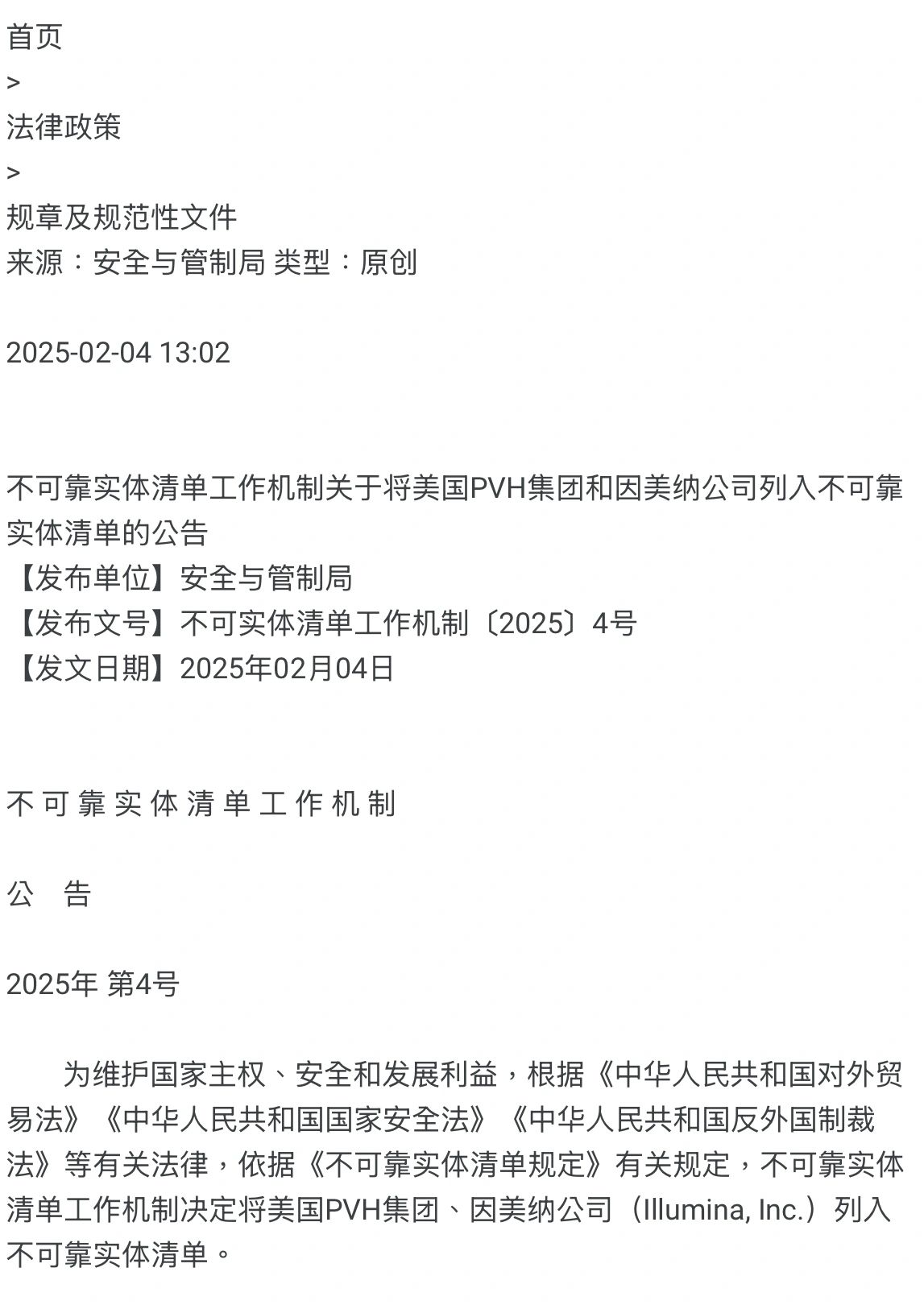
On February 4, 2025, China placed Illumina on its “unreliable entities” sanctions list. The sanctions state, in part:
“To safeguard national sovereignty, security and development interests, in accordance with the Foreign Trade Law of the People’s Republic of China, the National Security Law of the People’s Republic of China, the Anti-Foreign Sanctions Law of the People’s Republic of China and other relevant laws, and in accordance with the relevant provisions of the Unreliable Entity List Regulations, the Unreliable Entity List Working Mechanism has decided to include the US PVH Group and Illumina, Inc. in the Unreliable Entity List.
The above two entities violated normal market trading principles, interrupted normal transactions with Chinese companies, adopted discriminatory measures against Chinese companies, and seriously damaged the legitimate rights and interests of Chinese companies. The Unreliable Entity List working mechanism will take corresponding measures against the above-mentioned entities in accordance with relevant laws and regulations.”
Because China does not control the world’s reserve currency as the United States does, its sanctions do not pack the same wallop, but their reason for engaging in this policy deserves analysis.
Genomics and Sanctions as a Tool of National Power
We have questions. There is a substantial relationship between Singapore and Illumina, mainly in the export of ethnic Chinese scientists working for the company. Sure, companies such as BGI–formerly the Beijing Genomics Institute–who compete with Illumina directly. But there is a distinct factor of national interest at play. China appears to be using BGI as soft power when it collaborates on health through genomics with neighboring countries. The United States is generally quiet about the role genomics might play in its national strategy. Europe clearly has a dog in the fight as we could see when the European Commission stopped the merger of Illumina and Grail.
So China is saying that it no longer trusts Illumina as a vendor of laboratory equipment. This is after the CIA released an unclassified report about the origins of COVID, a virus that may have resulted in long-term changes to people’s DNA. It seems likely that the genomic analysis could be important given the implications of what may be soon released in a full report.
So What? What if…? What next?
If you have questions about what this means for your business, call us today.