Supply Chain Risk: The Future Is More Down-and-Dirty Than Sexy
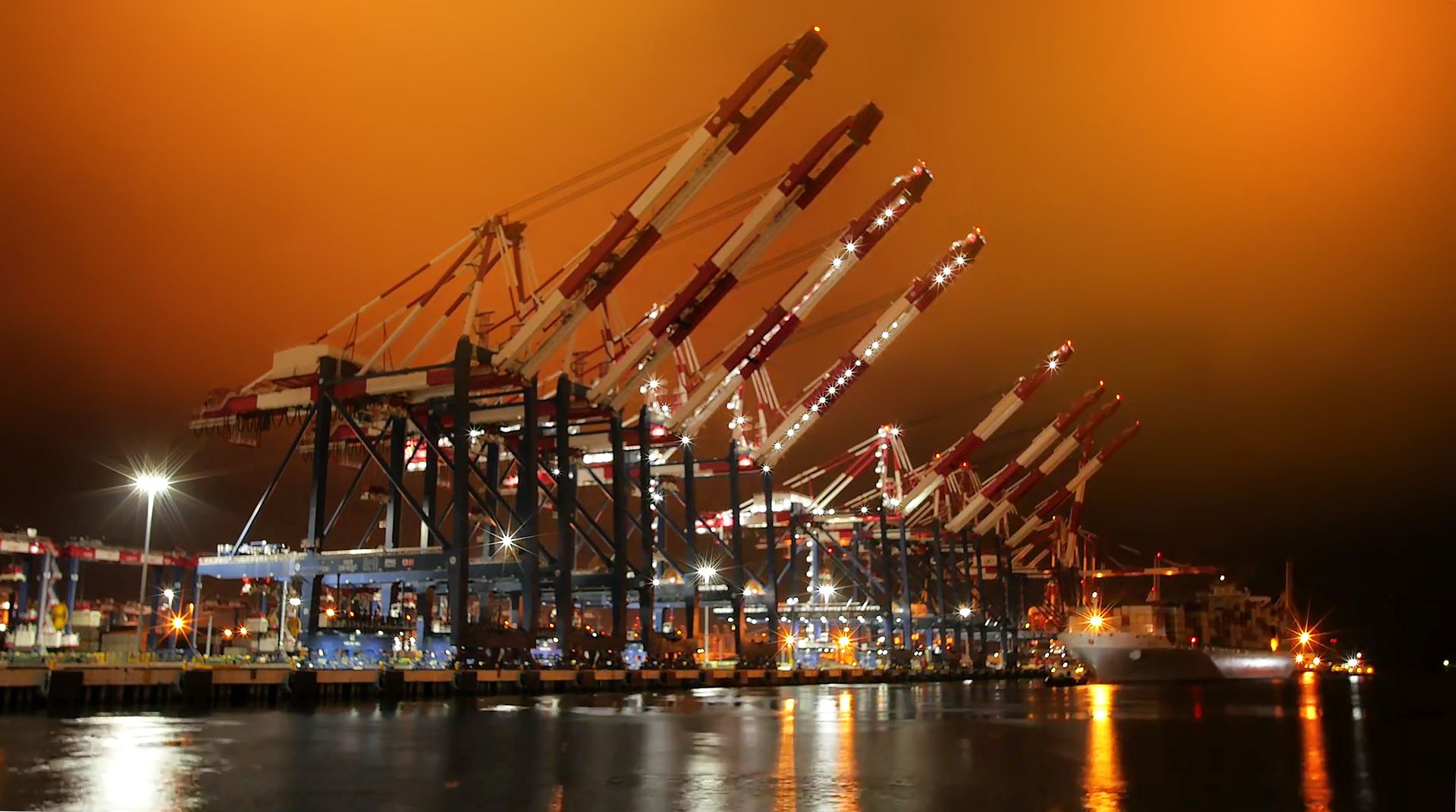
In my 2011 satire How to Predict the Future…and WIN!, the fictional guru Dr. P. Hughes Egon gave this advice for scenario planning: keep your focus on the sexy future of gadgets, and stay well away from “moribund topics such as fertilizer or rice or coal or railroads or industrial manufacturing or sea shipping.” Wait, he said, until the tech magazines start making a big deal out of turnips and ball bearings.
My serious answer underneath was this: “The future is more down-and-dirty than sexy.”
“You could throw all of your plasma/LCD/nanomatrix teevees in the river and change pretty much nothing about the world… Try, however, to spend a day without industrial lubricant. Make an attempt to live without goods that arrive via container ships. Cut your country off from coal for a couple weeks. See what happens.”
Fifteen years later, the world has run that experiment for us, again and again. This post is about what it showed, and what it means for anyone responsible for strategy.
One honest note first. The same chapter contained two of my worst forecasts: that the world would keep running on coal and that renewables would not matter. I graded both as stinkers in my fifteen-year scorecard. The principle held up better than my energy calls did. Physical reality still rules; I just picked the wrong physical reality.
The world is still about dirt, rock and logistics
In 2011 I described the first step of every futures exercise we ran for clients: diagram every activity that goes into the business, “in pointillistic detail.” Dig far enough and “you always end up at the awesome complexity of down and dirty industrial economics.”
“The world, at the end of the day, is still about extracting resources from the Earth’s crust, processing them, refining them through manufacturing and delivering them around the world.”
That sounded unfashionable in the age of apps. Here is how the years since tested it.
Four down-and-dirty surprises
The ship
On March 23, 2021, the container ship Ever Given ran aground in the Suez Canal. It was refloated on March 29. While it sat there, more than 430 ships waited at the canal’s entrances, holding up an estimated $9 billion in global trade each day (Notteboom, Pallis and Rodrigue, Port Economics, Management and Policy). One stuck ship, in one ditch.
The chip
The same year, a shortage of semiconductors, components worth a sliver of a car’s price, cost the global auto industry an estimated $210 billion in revenue and 7.7 million vehicles of lost production (AlixPartners). The sexy part of the car, its software and screens, depended on an unglamorous supply chain nobody in the showroom had ever thought about.
The minerals
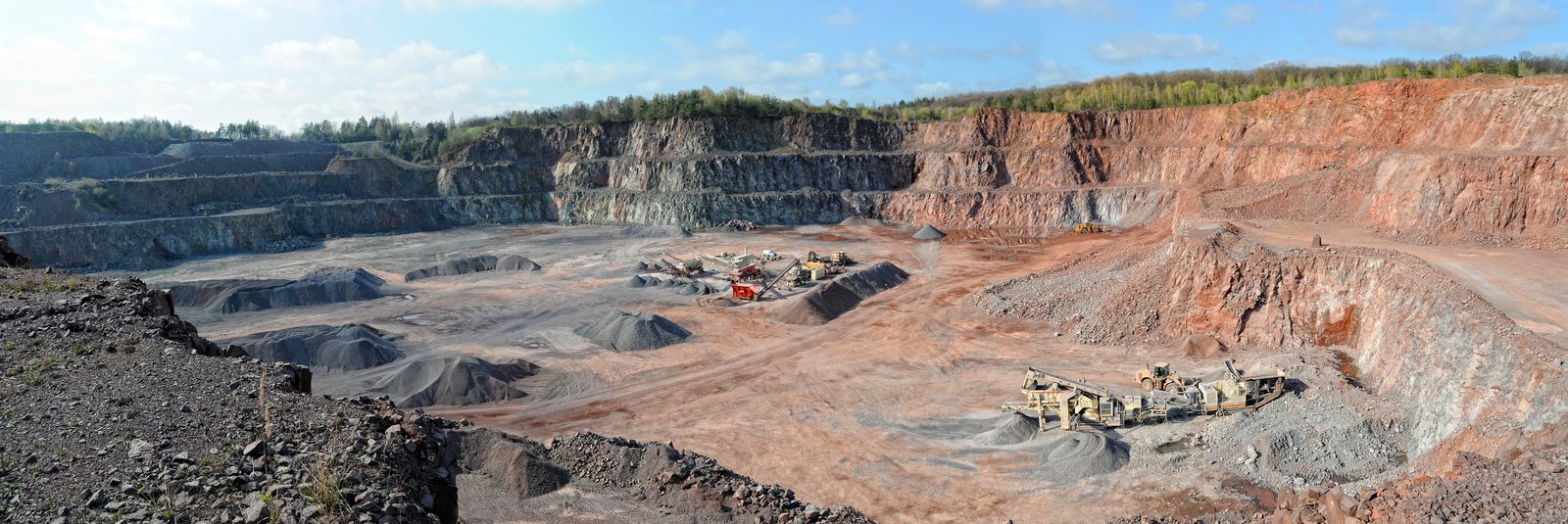
In 2011 I also wrote that “China is reaching strategically into Africa with long-term contracts that will guarantee them access to raw materials for the next century of manufacturing.” That patience paid off. By 2024, China accounted for more than 95% of refined rare earths and battery-grade graphite and about 70% of lithium chemicals (IEA Global Critical Minerals Outlook 2025, via Mercom).
Then Beijing used the position. In April 2025 it required case-by-case export licenses for seven rare earth elements and magnet materials. In October 2025 it announced sweeping new controls on rare earth materials, equipment and technology, including rules reaching products made outside China (Mayer Brown). After the Xi–Trump meeting in Busan, China paused the October measures for a year, but the April licensing system stayed in force (Foundation for Defense of Democracies). A pause is not a surrender of leverage.
Washington’s answer was just as down-and-dirty. In July 2025, the Defense Department took a $400 million equity stake in MP Materials, the only scaled U.S. rare earth miner, and guaranteed a price floor of $110 per kilogram for neodymium-praseodymium oxide for ten years (Federation of American Scientists). When the Pentagon is underwriting the price of a magnet ingredient, the commodity is no longer boring.
The strait
And in 2026, the oldest chokepoint of all. Since the U.S.–Iran war began in late February, the Strait of Hormuz has been effectively blockaded. Oil moving through it fell from 21.6 million barrels per day in the last quarter of 2025 to 4.9 million in the second quarter of 2026, according to the U.S. Energy Information Administration, which expects disruptions to continue through 2027 (Associated Press, via The Brunswick News). Roughly a fifth of the world’s oil used to pass through that one channel (gCaptain).
Even the sexiest technology runs on dirt
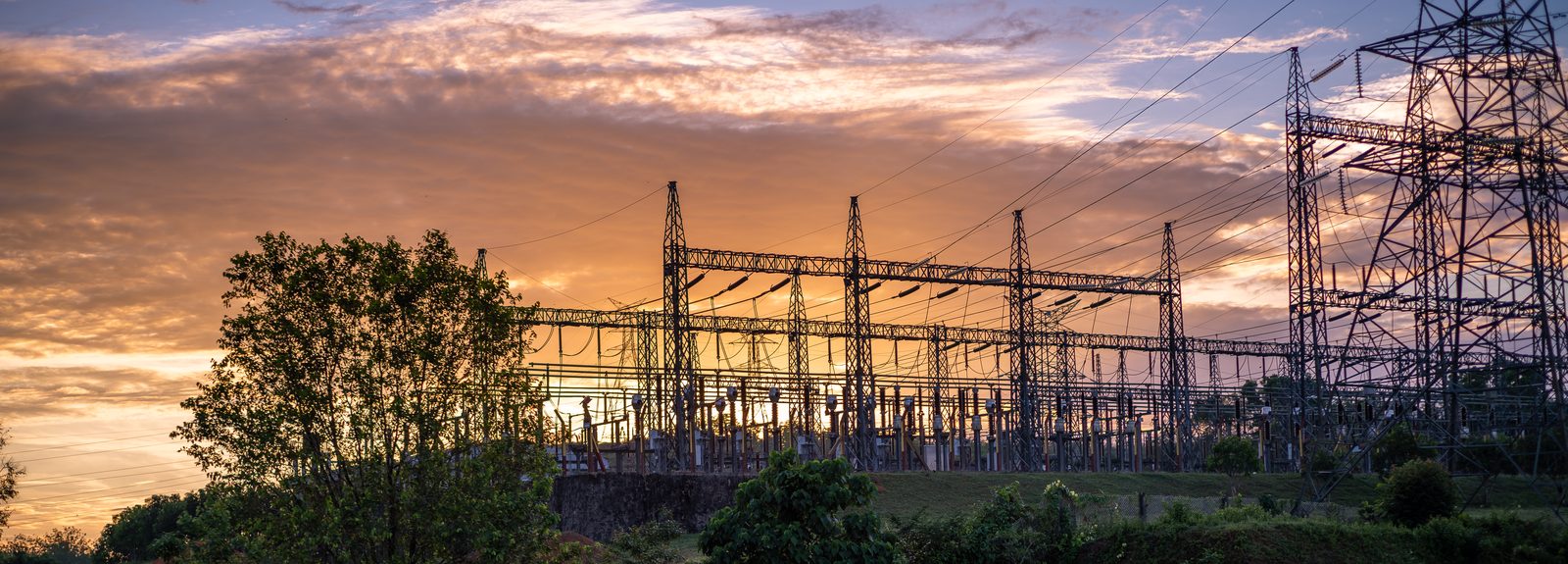
The shiniest technology of this decade is artificial intelligence. It is also a story about power plants, transformers, copper and cooling water. The International Energy Agency projects that data center electricity demand will more than double to about 945 terawatt-hours by 2030, more than Japan uses today, and that data centers will account for nearly half of U.S. electricity demand growth over that period (IEA Energy and AI, via RCR Wireless).
The AI race will be won or lost partly in permitting offices, turbine factories and transmission lines. That is not the version of the story you will hear at a product launch. It is the version that will decide who gets to launch.
What this means for strategy
Here is how to put the down-and-dirty principle to work:
- Map the physical business. Diagram every input, from raw material to finished delivery: minerals, energy, water, components, shipping routes, ports. Most strategy documents stop at customers and competitors. Keep going until you hit dirt.
- Find the concentrations. Mark every input that depends on a single country, a single supplier, a single route or a single chokepoint. Those are your exposures, whether or not anyone has ever priced them.
- Build scenarios around them. Use a tool like the Impact/Probability Matrix to explore how each chokepoint could fail, including the wild cards everyone in the room thinks are paranoid. Five years ago, a closed Strait of Hormuz was a wild card.
- Watch the signposts. Export-control announcements, shipping insurance rates, port congestion, government stockpiling and price-floor deals tell you which scenario is unfolding long before the shortage arrives on your loading dock.
- Treat infrastructure as strategy. As I wrote in 2011, the dirty, uncool investments “take years to build, a decade or more to amortize,” and create “the competitive advantage that can last a generation.” A second supplier, a different factory site or a stockpile is boring right up until it is the only reason you are still shipping.
Get back to your roots
I once worked at a think tank where I was the only person in the room who had ever done manual labor, and the only one who could roughly describe how food arrived at a grocery store. It showed in the analysis. People fluent in the language of platforms and disruption had no feel for fertilizer, freight or the grid.
I ended that 2011 chapter with a line that still holds: “the world works just fine without social media, and not at all without farming.” The future will keep surprising us. Most of the surprises will come from places that were never sexy enough to make the news, until they stopped working.
Frequently asked questions
What is supply chain chokepoint risk?
The risk that a single route, supplier, country or facility that many businesses depend on, such as a canal, a strait or a refinery, fails or is cut off, halting production far downstream.
What are critical minerals?
Minerals essential to modern technology and defense whose supply is at risk, such as rare earths, lithium, graphite and cobalt. Their refining is highly concentrated, much of it in China.
How can companies prepare for supply chain shocks?
Map physical inputs down to raw materials, identify single-source and single-route dependencies, build scenarios around how each could fail, watch early-warning signposts, and invest in alternatives before a crisis.
Why does AI depend on physical infrastructure?
AI runs in data centers that need large amounts of electricity, grid connections, cooling and hardware made from critical minerals. The IEA projects data center electricity use will more than double by 2030.
How to Predict the Future…and WIN! is still available in paperback and on Kindle.
Related analysis from Competitive Futures
- I Wrote a Book About Predicting the Future in 2011. Here’s My Scorecard.
- The Impact/Probability Matrix: A Scenario Planning Tool
- How to Use STEEP Trend Analysis in Business Strategy
Want this kind of analysis for your organization? Contact Competitive Futures or learn more about Eric Garland.
About Competitive Futures
Competitive Futures has provided strategic intelligence and foresight to corporate and government clients since 2002. Its principal, Eric Garland, publishes analysis here, on Game Theory Today, and in the Systemics Quarterly Brief.
Read next
- Seventy Countries, Six Cities: The Global Network Behind Iran
- The Systemics Quarterly Brief: 2026 Prospectus
- Strategic intelligence services for executives and governments
- All analysis from Competitive Futures
Stay in touch
Leave your email and a note about the Brief, a briefing for your team, or this piece, and we will be in touch.
This piece is part of our guide to Strategic Surprise and Early Warning.