Short-term thinking bias in the news
The news media are complicit in the total inability of the average person to think about the long-term impact of anything. One of the potent techniques you will see is the positioning of a recent event as completely insulated from the longer-term trend at play. For a nice chuckle, check out this lede from today’s Financial Times, Gold loses lustre as haven asset:
It wasn’t supposed to be like this. Gold, touted as the ultimate haven, was supposed to rise in a crisis. And yet in the past four days, its behaviour has been in line with the riskiest of assets.
Right. So, giving long backrubs to megabanks and cheerleading every possible industry-consolidating supermerger is good in all kinds of weather, no matter the outcome year over year. But if gold backs off a ten year trend for four days, you write an article warning readers to divest themselves, since It wasn’t supposed to be this way!
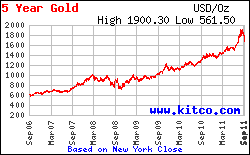
Let’s look at the trends over five and ten years:
Five: looking pretty good!
Now, ten: looking really good!
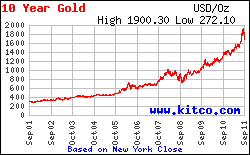
I dunno, FT, this has been a pretty good haven investment compared to, say, the Lehman Brothers stock I still own for old times’ sake.
But when you compare it to, say, the LAST FOUR DAYS, yes, you’re right, it looks like hell. GET OUT NOW!!! INVEST IN A MEGABANK OR SOMETHING!
Unless you take a slightly longer view. Which is up to you.
Related analysis from Competitive Futures
- Why SWOT Analysis Sucks
- Cognitive Bias: A Field Guide for Leaders Who Must Decide Under Uncertainty
- Anthropic IPO: Its Strange Governance Structure Needs a Closer Look
Want this kind of analysis for your organization? Contact Competitive Futures or learn more about Eric Garland.
About Competitive Futures
Competitive Futures has provided strategic intelligence and foresight to corporate and government clients since 2002. Its principal, Eric Garland, publishes analysis here, on Game Theory Today, and in the Systemics Quarterly Brief.
Read next
- Seventy Countries, Six Cities: The Global Network Behind Iran
- The Systemics Quarterly Brief: 2026 Prospectus
- Strategic intelligence services for executives and governments
- All analysis from Competitive Futures
Stay in touch
Leave your email and a note about the Brief, a briefing for your team, or this piece, and we will be in touch.