Hungary Opens the Spy Files
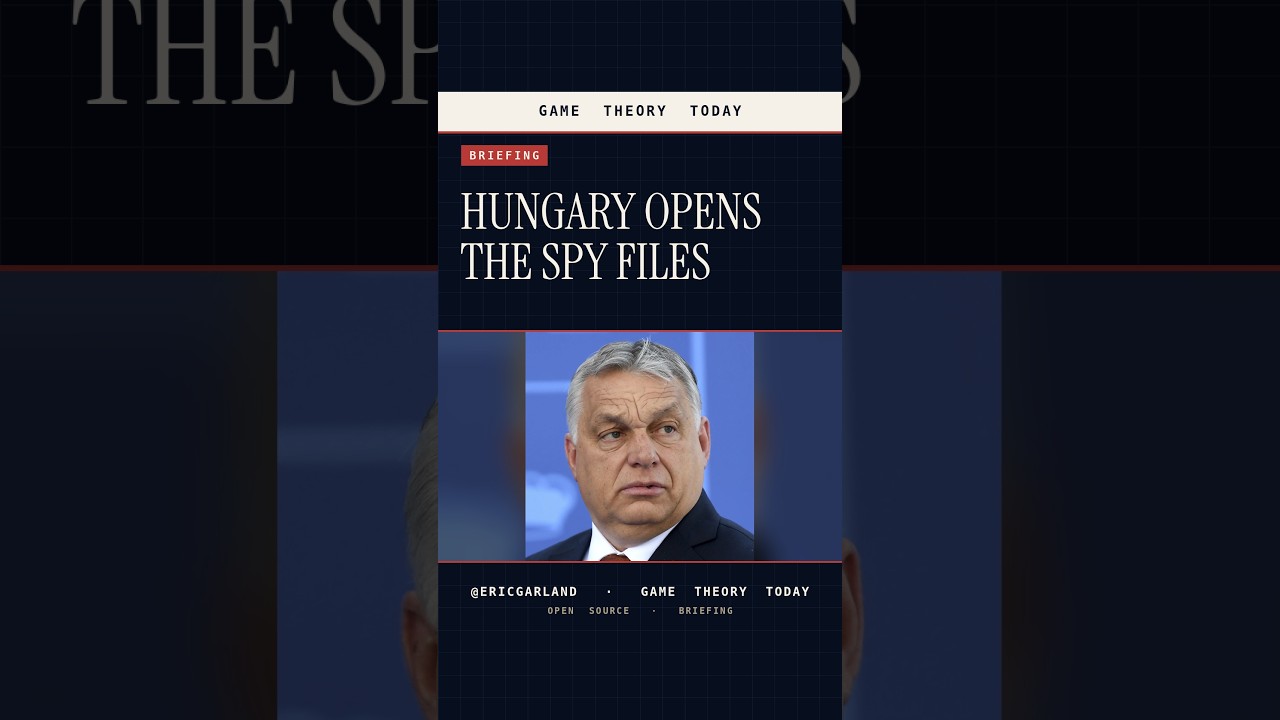
On November 4, 2026, Hungary’s Historical Archives of the State Security Services (ÁBTL) made the informant registry of the country’s communist-era political police searchable by name. The release covers three record types: the “No. 6” index cards on people recruited or approached, the B-logs that registered recruitment dossiers, and the “H” dataset from the secret police’s own magnetic-tape database as it stood in 1990. The recruitment dossiers themselves, of which the archive holds nearly 9,000, are due online by February 25, 2027. The release comes six months after Péter Magyar was sworn in as prime minister, ending Viktor Orbán’s 16 years in power. (For how those services evolved from the ÁVH to today, see Hungarian Intelligence: History, Structure, and the Headlines.)
This has been tried before. In 2005, a Polish journalist leaked an index of about 240,000 names from the Institute of National Remembrance that mixed officers, informants, and their victims. In 2018, Latvia published the KGB card files that survived the burning of its archive, and several people named said they had been framed. With one record and nothing else, denial is a winning strategy. Hungary published three independent records of the same system, kept by different clerks years apart, which makes a consistent forgery far harder to claim. It also cuts the other way: a name that appears on only one record now has a documented inconsistency. The question for February is what the recruitment files show about how people were brought in, and whether anyone named is still in public life.
Hungary’s intelligence tradition runs much deeper than the communist era. Under the Habsburgs, Vienna’s Evidenzbureau, founded in 1850, is often described as the world’s first permanent military intelligence service. For how other countries have handled their secret police archives, including Germany’s Stasi files, see German Intelligence and our guide to intelligence services around the world.
Eric Garland is an intelligence analyst personally sanctioned by the Russian Federation in May 2022 for his work on Russian intelligence operations. He is the author of the 2016 “Game Theory” thread, named by The New York Times as one of the 25 most important tweets in history.
🔔 Subscribe for daily geopolitical intelligence analysis. 📝 Substack: ericgarland.substack.com 🎤 Book Eric to speak: Chartwell Speakers — https://www.chartwellspeakers.com/speaker/eric-garland/
SOURCES
Állambiztonsági Szolgálatok Történeti Levéltára (ÁBTL), Nyitott Akták, nyitottaktak.hu, November 4, 2026
ÁBTL, “A 6-os karton mezői” (Fields of the No. 6 card), text by Eszter Tóth, from the permanent exhibition “Egy diktatúra hagyatéka,” 2021
Euronews, “Péter Magyar sworn in as Hungary’s new prime minister after landslide April election victory,” May 9, 2026
Associated Press, “Hungary’s Péter Magyar sworn in as prime minister, ending Viktor Orbán’s 16-year rule,” May 9, 2026
Radio Prague International, “Polish journalist brings skeletons out of communist closet by posting list of former secret police spies on web,” 2005
LSM (Latvian Public Broadcasting), “Things to know about Latvia’s soon-to-be-published KGB files,” December 2018
The New York Review of Books, “A Partial Freedom: What Latvia Found in the KGB Archives,” March 5, 2019
About Competitive Futures
Competitive Futures has provided strategic intelligence and foresight to corporate and government clients since 2002. Its principal, Eric Garland, publishes analysis here, on Game Theory Today, and in the Systemics Quarterly Brief.
Read next
- Seventy Countries, Six Cities: The Global Network Behind Iran
- The Systemics Quarterly Brief: 2026 Prospectus
- Strategic intelligence services for executives and governments
- All analysis from Competitive Futures
Stay in touch
Leave your email and a note about the Brief, a briefing for your team, or this piece, and we will be in touch.