The Donroe Doctrine: Who Aligned With Washington, and Why It Outlasts the Midterms
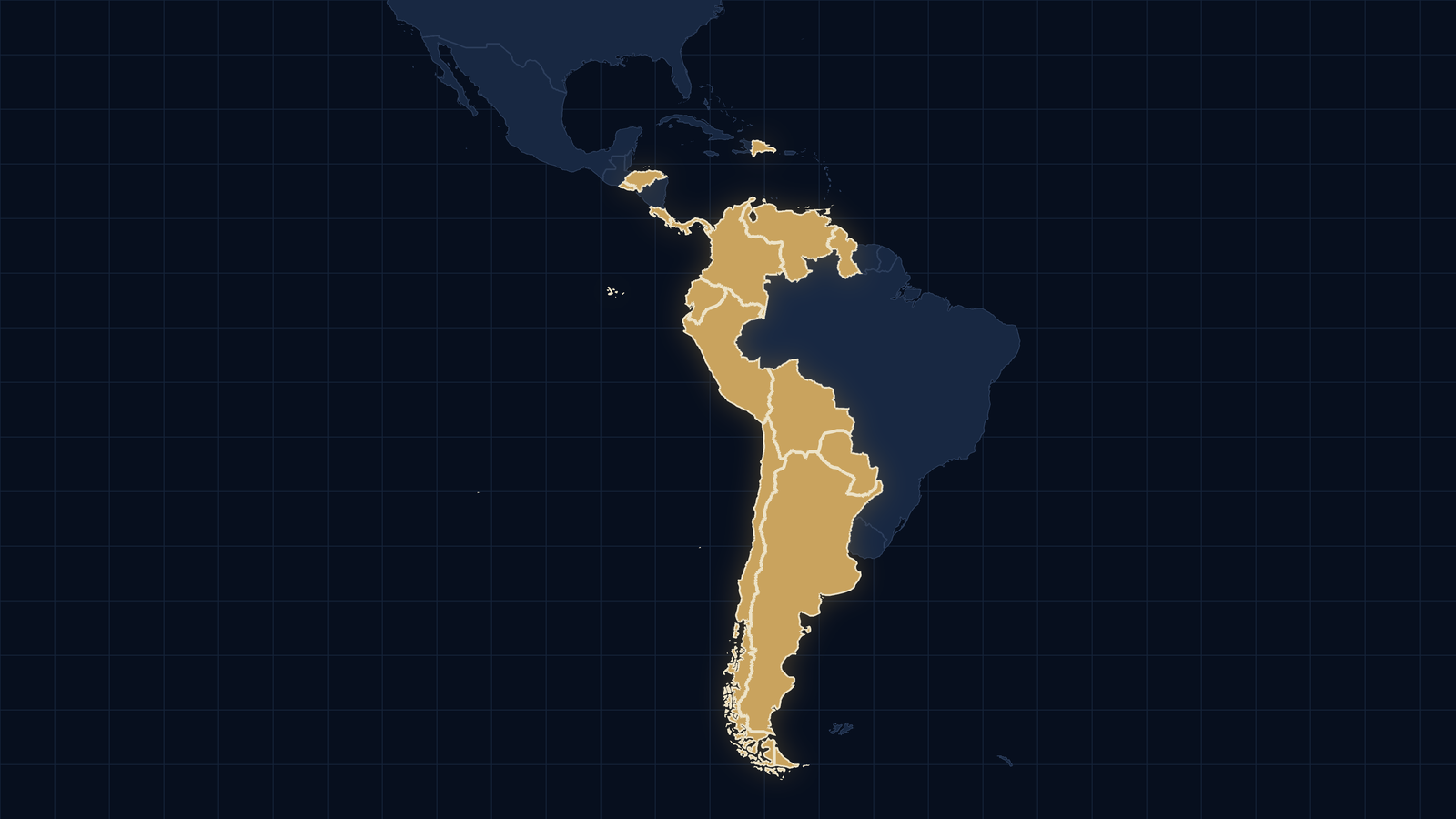
Democrats won control of the House and the Senate on November 3, 2026. That will change a great deal in Washington. It will not change who governs in Bogotá, Lima, Santiago, or La Paz. Over the past two years, voters across Latin America elected a new set of governments that line up with the United States, and those governments have spent 2026 signing security, extradition, and energy agreements with Washington. Their mandates come from their own voters, on their own calendars, and most of them run past January 2029.
This piece maps which governments have aligned with the United States, what they have actually signed, where the alignment stops, and what a divided Washington means for companies and governments working in the hemisphere.
What the Donroe Doctrine is
“Donroe Doctrine” is the shorthand for the Trump administration’s Western Hemisphere policy. The administration’s own term is the Trump Corollary to the Monroe Doctrine, set out in the National Security Strategy released in December 2025 and the National Defense Strategy of January 2026. The 1823 Monroe Doctrine warned European powers to stay out of the Americas. The corollary aims at China, Russia, and Iran, and it treats cartels and transnational criminal groups as security threats to be met with military as well as law-enforcement tools.
The name stuck after U.S. forces captured Nicolás Maduro in Caracas on January 3, 2026. Asked about the operation, President Trump said the Monroe Doctrine had been surpassed and that people now call it the “Donroe” Doctrine.
In practice, the policy rewards governments that cooperate, through security assistance, trade, and political backing, and puts heavy pressure on those that do not, through sanctions, tariffs, and, in Venezuela’s case, force.
The governments that aligned
Some of the region’s leaders were aligned with Washington before 2025:
- Argentina: Javier Milei, in office since December 2023.
- El Salvador: Nayib Bukele.
- Ecuador: Daniel Noboa, re-elected in 2025.
- Dominican Republic: Luis Abinader.
- Paraguay: Santiago Peña.
- Panama: José Raúl Mulino.
Then came a new class, elected between October 2025 and June 2026:
| Country | President | Took office | Term runs to |
|---|---|---|---|
| Bolivia | Rodrigo Paz | November 2025 | 2030 |
| Honduras | Nasry Asfura | January 2026 | 2030 |
| Chile | José Antonio Kast | March 2026 | 2030 |
| Costa Rica | Laura Fernández | May 2026 | 2030 |
| Peru | Keiko Fujimori | July 2026 | 2031 |
| Colombia | Abelardo de la Espriella | August 2026 | 2030 |
Bolivia’s vote ended almost 20 years of socialist rule. Honduras replaced a left-wing government with a candidate President Trump endorsed. Peru elected Keiko Fujimori, daughter of former president Alberto Fujimori, after a runoff count that took three weeks. Colombia’s result was the largest shift: after four years of Gustavo Petro’s open conflict with Washington, voters chose Abelardo de la Espriella, a law-and-order candidate who also holds U.S. citizenship.
Guyana and Trinidad and Tobago, both founding members of the security coalition described below, round out the list. In Venezuela, the government that remains is not right-wing at all, but it is now working with Washington.
What they have signed
The alignment shows up in agreements, not just speeches.
The Shield of the Americas. On March 7, 2026, at Trump National Doral in Florida, the administration launched the Shield of the Americas, a coalition against cartels and transnational criminal groups whose operational arm is the Americas Counter Cartel Coalition. Twelve countries attended the founding summit. The coalition now counts 19. In September, member governments committed to coordinated sanctions, including asset freezes and visa restrictions, against 24 groups the United States has designated.
Colombia. De la Espriella announced two days after his election that Colombia would join the coalition, and it did so on August 7, the day he was sworn in. The State Department announced a $1 billion security package the same week, and Colombia is hosting a coalition office in Medellín. In his first weeks in office, de la Espriella signed more than 30 extradition orders to the United States, including cases suspended during the previous government’s peace talks, and he has authorized joint operations against armed groups.
Peru. President Fujimori announced on September 11, after meeting Secretary of State Marco Rubio, that Peru would join the coalition. At the Conference of Defense Ministers of the Americas in Cusco in July, Under Secretary of War for Policy Elbridge Colby cited Peru’s purchase of F-16 fighters as a model for the hemisphere.
Drones. U.S. MQ-9 Reaper drones moved from Africa to South America this fall. Ecuador’s defense ministry announced on October 8 that two were operating along its northern border, and Colombia has agreed to receive three on loan.
Exercises. Panama hosted Panamax 2026 in September, the coalition’s largest multinational exercise.
Squeezing Havana
The same governments have cut back their ties to Cuba. Honduras ended its agreement with Cuba’s medical brigades in late February, and 168 Cuban health workers left the country in early March. Jamaica ended a medical cooperation arrangement that dated to 1976. Guatemala began winding down its own brigade in January. The Dominican Republic ordered nine Cuban embassy officials to leave in August.
The medical missions are one of the Cuban state’s main sources of foreign currency, and Washington has pressed governments for more than a year to end them. Combined with U.S. measures against oil shipments to Cuba, the result is a Cuban government with fewer patrons and fewer customers in its own region than at any point in decades.
Venezuela: a Chavista government working with Washington
Venezuela is the strangest case. After Maduro’s capture, his vice president, Delcy Rodríguez, became acting president. Maduro is held in Brooklyn, and his trial in the Southern District of New York is set for June 2027.
Rodríguez chose to deal rather than fight. On August 28, President Trump announced an oil agreement, and the next day Rodríguez described it as a 25-year arrangement covering 17 fields with a production target above 1.5 million barrels per day. The fields are operated by North American Blue Energy Partners (NABEP), a privately held company controlled by a Venezuelan businessman. The U.S. government receives an equity stake in NABEP’s parent company and the right to buy part of its production at cost. The first cargo, about 1 million barrels, arrived in Corpus Christi, Texas, on October 27.
The deal leaves a great deal unsettled. Caracas describes a 25-year agreement while U.S. disclosures describe much longer concessions, the fields were awarded without a competitive process, and no date has been set for the presidential election Rodríguez has promised. Opposition leader María Corina Machado returned to Venezuela in late October and has criticized the contract’s lack of transparency. An election could put her in power. For now, a government built by Hugo Chávez is selling oil to the United States under an agreement Washington helped write.
Where the alignment stops
The shift is broad, but it is not complete.
- Brazil, the region’s largest economy, re-elected Luiz Inácio Lula da Silva on October 25 with 51.7% of the vote. His challenger, Senator Flávio Bolsonaro, ran as a Trump ally.
- Mexico is not in the coalition, which limits what any counter-cartel effort can achieve.
- Cuba and Nicaragua have not moved.
- Uruguay has a center-left government.
- Canada remains in a tariff dispute with Washington.
Alignment on security also does not mean alignment on everything. China is the leading trading partner for Chile and Peru, and Peru’s Chancay port was built with Chinese capital. These governments are choosing Washington on cartels and crime. On trade, most will keep doing business with Beijing for as long as the numbers favor it.
Why it outlasts the midterms
A Democratic Congress can hold hearings, cut or condition appropriations, block arms sales, and pass war-powers resolutions. It cannot change who governs in Santiago or Lima. Every president in the new class listed above is scheduled to remain in office after January 20, 2029, when President Trump’s term ends.
Just as important, most of these leaders did not win by running on President Trump. They ran on crime, cartels, and the economy at home, and they won on those issues. Those problems will still be there after the midterms, and so will the voters who elected them. The alignment rests on domestic politics in each country, not on the composition of the U.S. Congress.
The open question for 2027 is how a divided Washington manages a hemisphere that has already chosen sides. Congress controls much of the money behind security assistance, and the Venezuela oil arrangement raises questions about legal authority that a new majority will want to examine. Expect oversight of the Venezuela deal, of military operations against cartel targets, and of the coalition’s rules of engagement. Do not expect the governments themselves to reverse course because of it.
What this means for companies and governments
- Enforcement risk is rising across the region. Extraditions, joint sanctions against designated groups, and coordinated financial measures mean that business relationships tolerated a few years ago may now carry legal exposure in several jurisdictions at once.
- Chinese capital is under pressure. Washington is pressing governments to keep Chinese companies out of ports, telecommunications, and critical minerals. Companies with Chinese partners in those sectors should expect closer scrutiny, even in countries that keep trading with China.
- Venezuela is open, but not settled. The oil arrangement creates opportunities for service companies and traders, and it also carries political, legal, and reputational risk tied to an election that has no date.
- Plan for two Washingtons. Executive-branch commitments made in 2026 will be tested by congressional oversight in 2027. The partner governments’ commitments, by contrast, are likely to hold.
Frequently asked questions
What is the Donroe Doctrine?
It is the popular name for the Trump administration’s Western Hemisphere policy, officially the Trump Corollary to the Monroe Doctrine. It aims to limit Chinese, Russian, and Iranian influence in the Americas and treats cartels as security threats, combining incentives for cooperative governments with sanctions, tariffs, and military pressure on others.
Which countries are in the Shield of the Americas?
Twelve countries attended the founding summit in March 2026: Argentina, Bolivia, Chile, Costa Rica, the Dominican Republic, Ecuador, El Salvador, Guyana, Honduras, Panama, Paraguay, and Trinidad and Tobago. Peru and Colombia joined later. The coalition counted 19 members after Colombia’s accession in August 2026.
Does a Democratic Congress end the Donroe Doctrine?
No. Congress can constrain funding and conduct oversight, but it cannot change the governments that have aligned with Washington. Most of those governments were elected on domestic issues, and their terms run past 2029.
Is Venezuela part of the alignment?
Venezuela is not a coalition member, and its acting government is Chavista. Since Maduro’s capture, however, it has cooperated with Washington, most visibly through a long-term oil agreement under which U.S.-bound shipments began in October 2026.
Related reading
Competitive Futures briefs companies and governments on geopolitical risk and enforcement exposure across the Americas; details are on the services page.
Sources (for inline links in the WP build)
- The White House, proclamation establishing the Americas Counter Cartel Coalition, Doral, Mar 7 2026; Doral attendee list (Rio Times, Mar 8 2026)
- U.S. Department of War advisory, Colby travels to Peru (Trump Corollary, 2026 NDS); Colby remarks at the 17th CDMA, Cusco, Jul 2026 (Perry Center PDF); Responsible Statecraft on the F-16 citation
- U.S. Department of State, Colombia joins Shield / $1B package, Aug 7 2026 (LatinNews, Reuters via DZRH); Medellín office (Malay Mail, Jul 22 2026); 30+ extraditions (Finance Colombia, Sep 3 2026); joint operations (El País via Watching America); CRS IN12689, Sep 24 2026 (U.S. citizenship)
- Peru joins, Sep 11 2026 (Andina); Fujimori proclaimed Jul 3 2026 (Andina, JNE)
- Shield sanctions on 24 groups, UNGA Sep 22 2026 (Center Square / Just the News); Panamax 2026 and 19th member (Newsweek, InSight Crime)
- MQ-9s: Ecuador MoD Oct 8 2026 (Primicias, El Comercio); Colombia three on loan (El Universal, Infodefensa via Migflug)
- Cuba medical missions: Cayman Compass (Mar 9 2026); Our Today / Jamaica MFA (Mar 5–6 2026); Miami Herald via Canada Caribbean Institute; Voz (Guatemala); DR expulsion of nine Cuban officials, Aug 13 2026 (Cubanet; single source, confirm)
- Maduro: CBS (capture, MDC Brooklyn); Gray Media (trial set Jun 1 2027)
- Venezuela deal: S&P Global (Aug 31 2026); Ahram/AFP and Reuters via Daily Signal (Aug 29–30 2026); FDD Long War Journal (Sep 2 2026, NABEP, 100-year concessions); NABEP release (Oct 28 2026); Baird Maritime/Reuters (first cargo); AJOT/Reuters (Machado returns, transparency)
- Elections: AP (Colombia, Jun 24 2026); Brazil TSE / Depor (Lula 51.7%); AP via WLRN (Kast–Paz state visit, Oct 16 2026); AFP via Ahram (Bolivia, Honduras); Edelman (Colombia inauguration)
- Midterms: U.S. News & World Report; NBC; CNN (Nov 4–5 2026)
- Trump “Donroe” remark after Maduro capture (TVN-2, Buenos Aires Herald, Washington Examiner)
Open items for Eric
1. NSS date. Sources split between November and December 2025 for the National Security Strategy; the draft says December. Confirm against the White House PDF before publishing.
2. Term end dates in the table are standard constitutional terms from inauguration. Guyana and Trinidad and Tobago are left out of the table on purpose.
3. DR expulsion of nine Cuban officials is single-source. Confirm or cut the sentence.
4. Canada line is deliberately short. Expand or cut.
5. Featured image is the gold-on-navy map, which is ours. No Envato licensing needed.
6. Build in WordPress as a draft for your review once you’re happy with the text (Rank Math meta, FAQ block, inline source links, IndexNow after publish).