Hungarian Intelligence: History, Structure, and the Headlines
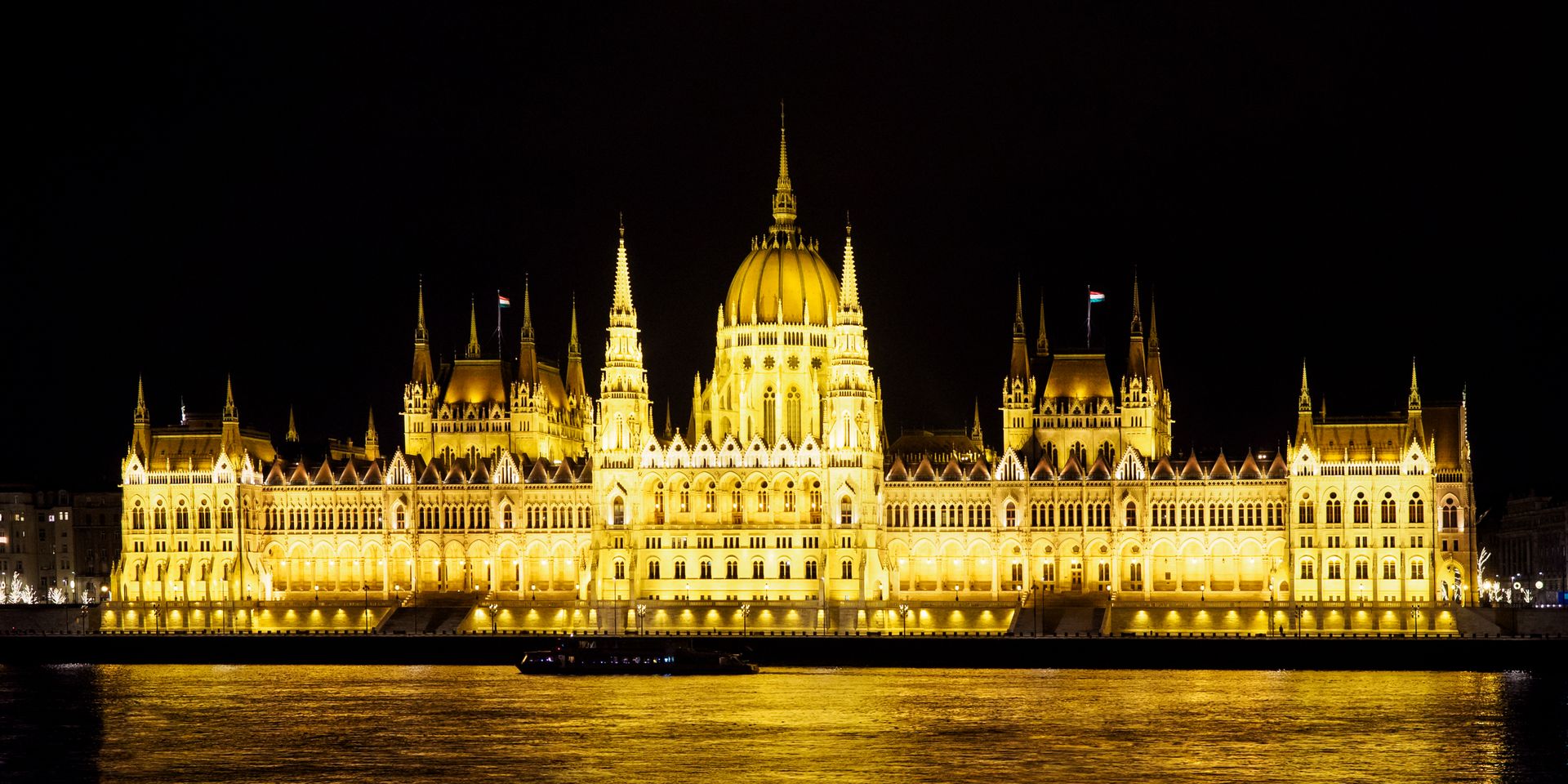
Hungary is a NATO and EU member of under ten million people, but its intelligence services have been at the center of some of the sharpest arguments inside both. Under Viktor Orbán, Budapest hosted a Russian-controlled bank that the U.S. Treasury called a vehicle for Russian intelligence, saw its own Foreign Ministry networks penetrated by Russian hackers, bought Pegasus spyware that was found on journalists’ phones, built a Sovereignty Protection Office that the European Commission took to court, and was reported to have run intelligence officers against the EU institutions in Brussels. In April 2026, voters removed Orbán’s government, and its successor replaced the heads of almost every service within weeks.
This page is a working overview of Hungary’s intelligence and security services: where they came from, how they are organized today, and the cases that have put them in the news. It relies on official Hungarian, EU, and U.S. documents, court and regulator findings, and named reporting, and it notes where a claim comes from a party, a rival government, or anyone with a stake in the outcome.
Hungarian intelligence at a glance
- Foreign intelligence: the Information Office (Információs Hivatal, IH), a civilian service returned in 2026 to the direction of the Foreign Ministry under Foreign Minister Anita Orbán, who has pledged to review its activities from 2022 to 2026 (Telex). Its director general since 2022, Krisztián Oláh, was dismissed effective June 13, 2026 (Daily News Hungary).
- Counterintelligence and domestic security: the Constitution Protection Office (Alkotmányvédelmi Hivatal, AH), under the Interior Ministry, headed since June 2026 by Colonel Zsolt Antal Annus, appointed by Interior Minister Gábor Pósfai (XpatLoop, citing MTI).
- Technical and surveillance service: the Special Service for National Security (Nemzetbiztonsági Szakszolgálat, NBSZ), under the Interior Ministry, headed since June 2026 by Brigadier General Szabolcs Tóth (XpatLoop).
- Military intelligence and counterintelligence: the Military National Security Service (Katonai Nemzetbiztonsági Szolgálat, KNBSZ), under the Defence Ministry. Its previous head, Norbert Tajti, was dismissed in June 2026; Attila Szuvák has been leading it on a temporary basis as the government’s nominee for director general (444).
- Analysis and fusion: the National Information Centre (Nemzeti Információs Központ, NIK), moved in September 2026 to the Prime Minister’s Office under Minister Bálint Ruff and headed by Colonel László Péter Orosz (444).
- Coordination and oversight: the prime minister’s national security chief adviser, Péter Tóth, coordinates across government (444). Parliament’s National Security Committee hears nominees for service chiefs in closed session, as it did for the KNBSZ nominee in September 2026 (HVG), and receives reports from the services.
- Relationship with the United States: a NATO ally since 1999, with periods of friction, most visibly the 2023 U.S. sanctions on the Russian-controlled International Investment Bank in Budapest (U.S. Treasury).
History: from the ÁVH to a law-based system
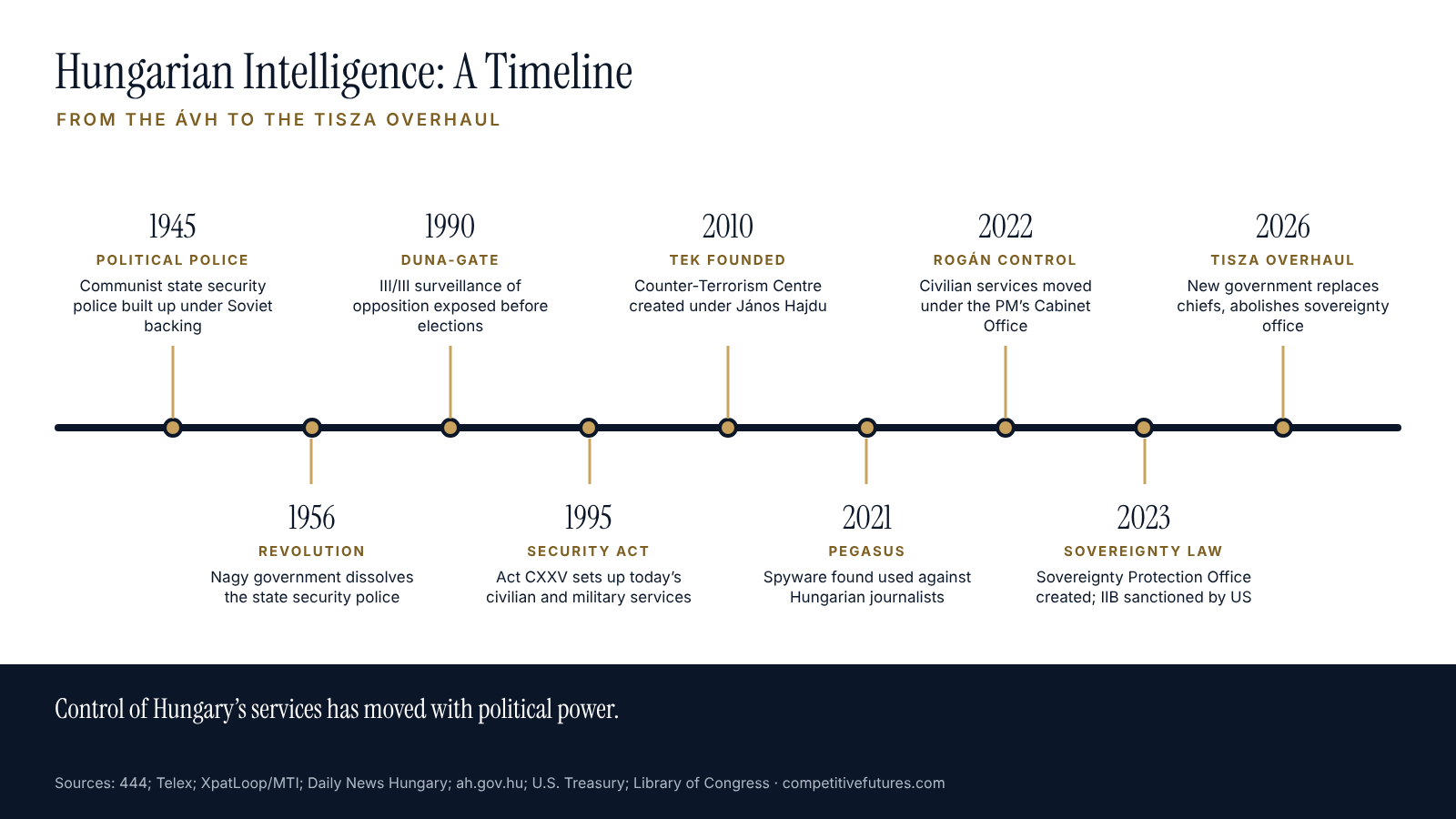
Hungary’s modern security services were built in the shadow of one of the most feared political police forces in the Soviet bloc. As the Communists consolidated power after 1945 with Soviet backing, the state security police, known first as the ÁVO and later as the ÁVH, became the instrument of the show trials and purges of the Rákosi years. When the party later investigated the purges, it cleared Mátyás Rákosi and “blamed the state security police instead” (Library of Congress). During the 1956 revolution, crowds “summarily hanged some member of the secret police,” and Imre Nagy’s short-lived government “dissolved the state security police” before Soviet tanks crushed the uprising (Library of Congress).
Under János Kádár, state security was rebuilt inside the Interior Ministry as Main Directorate III, with departments for foreign intelligence (III/I), counterintelligence (III/II), internal “reaction” (III/III), and military counterintelligence (III/IV). The system’s last scandal came after it was supposed to have stopped. In January 1990, months before the first free elections, a III/III officer, Major József Végvári, helped the independent filmmakers of Black Box show that the political police were still watching opposition activists. The scandal, known as Duna-gate, helped force out the interior minister, according to one of the filmmakers (COURAGE project; Blinken OSA Archivum).
The democratic state replaced Main Directorate III with civilian and military services governed by Act CXXV of 1995 on the National Security Services. The communist-era files went to what is now the Historical Archives of the Hungarian State Security, founded by Parliament in 2003, which holds state security records dated between December 21, 1944, and February 14, 1990 (EHRI). Unlike Poland and the Czech Republic, Hungary has never officially published the names of communist-era informers; in April 2026, Bálint Ruff, the incoming head of the Prime Minister’s Office, called opening the archives his “number one task” (Reuters via The Star).
After Orbán returned to power in 2010, the system was repeatedly reshaped. The Counter-Terrorism Centre (TEK) was created in 2010 under János Hajdu, Orbán’s former personal bodyguard, who led it from its founding until 2026 (Daily News Hungary). In May 2022, the four civilian services, the IH, AH, NBSZ, and the analysis center TIBEK, renamed the National Information Centre, were moved under Antal Rogán’s Cabinet Office of the Prime Minister (444). That arrangement lasted until the April 12, 2026, election, which Péter Magyar’s Tisza party won by a landslide; Magyar was sworn in as prime minister on May 9 (Euronews).
How Hungarian intelligence is organized today
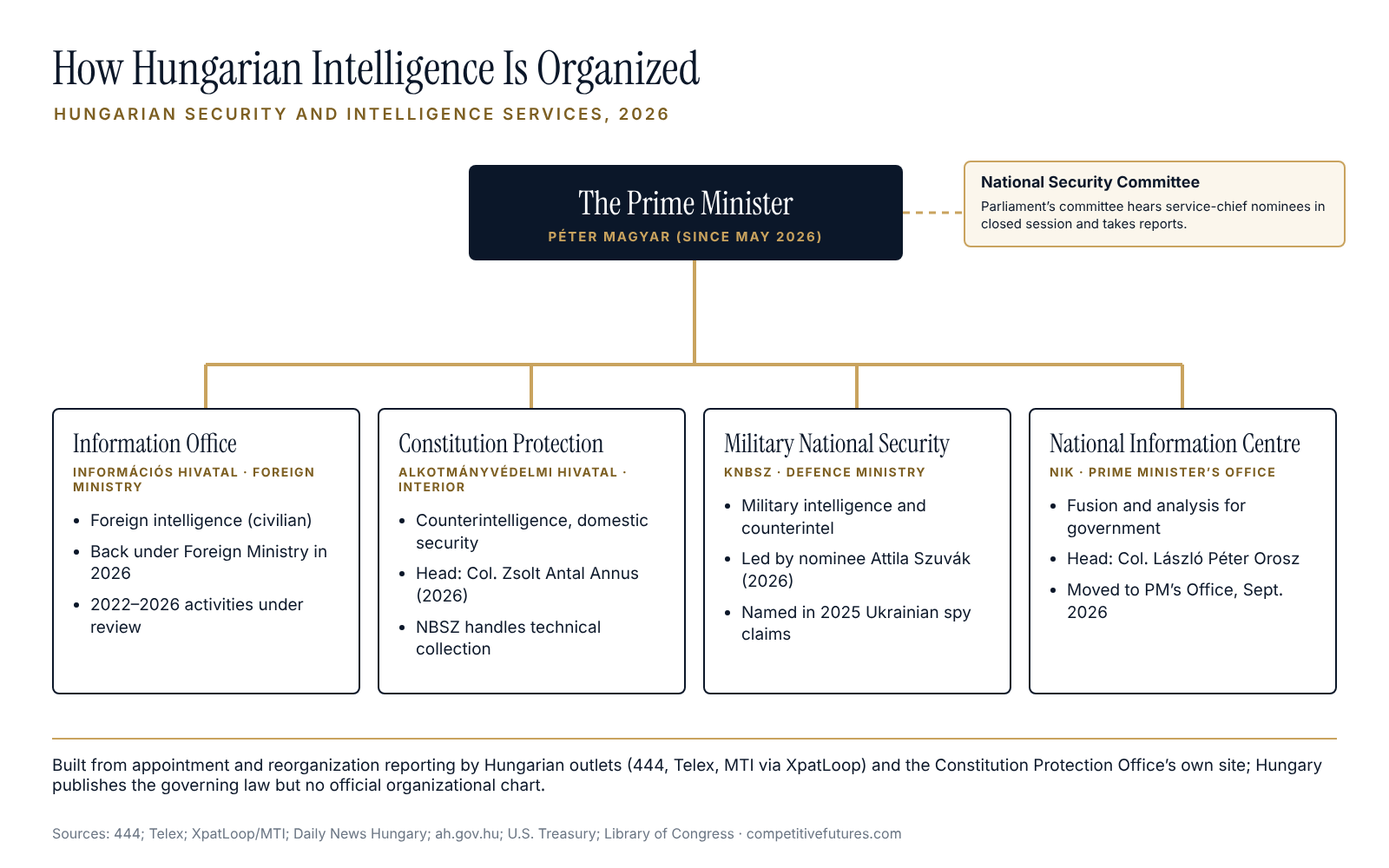
Hungary’s services rest on a published law, and their heads are appointed by decrees printed in the official gazette, Magyar Közlöny, which makes the structure easier to document than in many countries.
- The Information Office (IH) collects foreign intelligence and reports through the foreign minister.
- The Constitution Protection Office (AH) is the main counterintelligence and domestic security service. In its own words, it works “under the direction of the Minister of Interior” to protect “the constitutional order of Hungary” (Constitution Protection Office).
- The Special Service for National Security (NBSZ) carries out covert technical collection, such as interception, for the other services and the police, and has handled incident response on government networks, as in the Foreign Ministry case below.
- The Military National Security Service (KNBSZ) combines military intelligence and military counterintelligence under the Defence Ministry, led by Defence Minister Romulusz Ruszin-Szendi.
- The National Information Centre (NIK) fuses and analyzes information from the other services and was moved to the Prime Minister’s Office in September 2026 (444).
- The Counter-Terrorism Centre (TEK) was an independent police body with its own intelligence role. Hajdu was dismissed effective May 27, 2026 (Daily News Hungary), and in July 2026 the government submitted a bill to end TEK’s independent status and make it a unit of the general police from October 1, 2026 (Világgazdaság).
The pattern since 2010 is that control of the services moves with political power. The Orbán government concentrated the civilian services under the prime minister’s inner circle in 2022; the Magyar government dismissed the heads of the IH, AH, NBSZ, and KNBSZ by decrees published on June 12, 2026, without giving public reasons (XpatLoop), and then spread the services back across several ministries. Supporters call that depoliticization; critics have questioned individual appointments, as the KNBSZ case below shows. The institutions are in transition.
Between Brussels and Moscow
For sixteen years, Hungary’s services worked for a government that kept the closest relationship with Moscow of any NATO or EU member. That tension runs through nearly every case on this page. Washington argued that the Russian-controlled bank in Budapest opened “the door for the Kremlin’s malign influence activities in Central Europe and the Western Balkans” (U.S. Treasury). EU institutions came to worry about both Russian access to Hungarian systems and Hungarian intelligence work against the EU itself.
The Orbán government consistently rejected that picture. It described reporting on its services as the work of political opponents or foreign interests: its Foreign Ministry dismissed the 2022 hacking reports as “campaign lies,” its spokesman called the Brussels espionage reports a smear campaign run by foreign intelligence services, and the head of its Sovereignty Protection Office argued after the 2026 election that foreign interference had caused Fidesz’s defeat (Telex).
The Magyar government has moved in the opposite direction. In August 2026 it adopted a foreign policy doctrine that names Russia as a threat, and in September it expelled ten Russian diplomats (Euronews). Fidesz, now in opposition, says the new government is giving away sovereignty. The same services have now served two very different strategic outlooks within a year.
Hungarian intelligence in the news
Most public knowledge of Hungary’s intelligence services comes from the following cases. Much of the original reporting was done by Hungarian investigative outlets, especially Direkt36, Telex, and 444, often with international partners; the responses of the governments concerned are noted in each case.
Pegasus and the journalists (2021–2023)
In July 2021, Direkt36, part of the Pegasus Project consortium coordinated by Forbidden Stories, reported that Hungarian journalists, media owners, lawyers, opposition politicians, and others appeared on a leaked list of potential targets for Pegasus, the spyware made by Israel’s NSO Group, and that two of its own journalists, Szabolcs Panyi and András Szabó, had been surveilled (Direkt36). The government first denied the surveillance, then said little. On November 4, 2021, Lajos Kósa, the Fidesz chair of Parliament’s defence and law enforcement committee, said the Interior Ministry had acquired the software and that he saw nothing objectionable in it (444). The government said every use was lawful and authorized by a judge or the justice minister.
Official reviews backed that position. In January 2022, the data protection authority, NAIH, said it had examined close to 100 Pegasus cases and found each one justified; its full report is closed until 2050 (444). In June 2022, prosecutors closed their investigation, finding no crime, and noted that journalists “are not necessarily suspected of committing a crime because they were subject to secret information gathering” (Direkt36). Critics cited a 2022 European Court of Human Rights judgment that, in Direkt36’s summary, found Hungary lacked independent, external oversight of surveillance. No official has been charged over Pegasus.
Russian hackers in the Foreign Ministry (2022–2024)
In March 2022, Direkt36 reported that hacker groups working for Russia’s FSB and GRU had penetrated the Foreign Ministry’s networks, including its protected diplomatic network, and had not been removed (Direkt36 via Telex). The ministry, then led by Péter Szijjártó, told other outlets: “we do not pay attention to campaign lies.” In May 2024, 444 published a September 2021 report from the head of the NBSZ to the ministry, which attributed the attacks to the APT28 and APT29 groups and stated: “The total impact rendered more than 4,000 workstations and over 930 servers unreliable.” Szijjártó said the competent bodies had taken the necessary steps and questioned how the documents had been obtained (Telex). No one has been charged in Hungary over the breach.
The International Investment Bank (2023)
The International Investment Bank, a Soviet-era multilateral lender, had made Budapest its headquarters under the Orbán government. On April 12, 2023, the U.S. Treasury designated the bank, which it described as “a Russia-controlled financial institution in Budapest,” and three of its senior officials, including a Hungarian national, Imre Laszloczki, stating that “the IIB’s presence in Budapest enables Russia to increase its intelligence presence in Europe” (U.S. Treasury). The designation is an administrative sanction, not a criminal charge. A day later, Hungary’s Economy Ministry announced that it would withdraw from the bank, saying its operations had become “meaningless as a result of the U.S. sanctions” (RFE/RL).
The Sovereignty Protection Office (2023–2026)
In 2023, Parliament passed Act LXXXVIII of 2023 on the Protection of National Sovereignty, which created a Sovereignty Protection Office to investigate foreign influence. It was not one of the national security services under the 1995 law, and it operated with limited oversight; its targets included Transparency International Hungary and the investigative outlet Átlátszó (Human Rights Watch). The Council of Europe’s Venice Commission questioned the office’s legal basis and said it “fails to see the need for its establishment” (Council of Europe). The European Commission referred Hungary to the EU Court of Justice in October 2024 (Telex). In February 2026, Advocate General Juliane Kokott advised the court in Case C-829/24 that “Hungary infringed EU law by adopting the Law on the protection of national sovereignty” (CJEU); as of July 2026 the court had not ruled.
On June 30, 2026, Parliament voted 135 to 44 to abolish it, finding that it was “not performing any real public function” (Telex). Fidesz voted against; in the debate, its communications director said the government “wants to dismantle Hungary’s sovereignty step by step” (Telex).
The Brussels spy network (2012–2026)
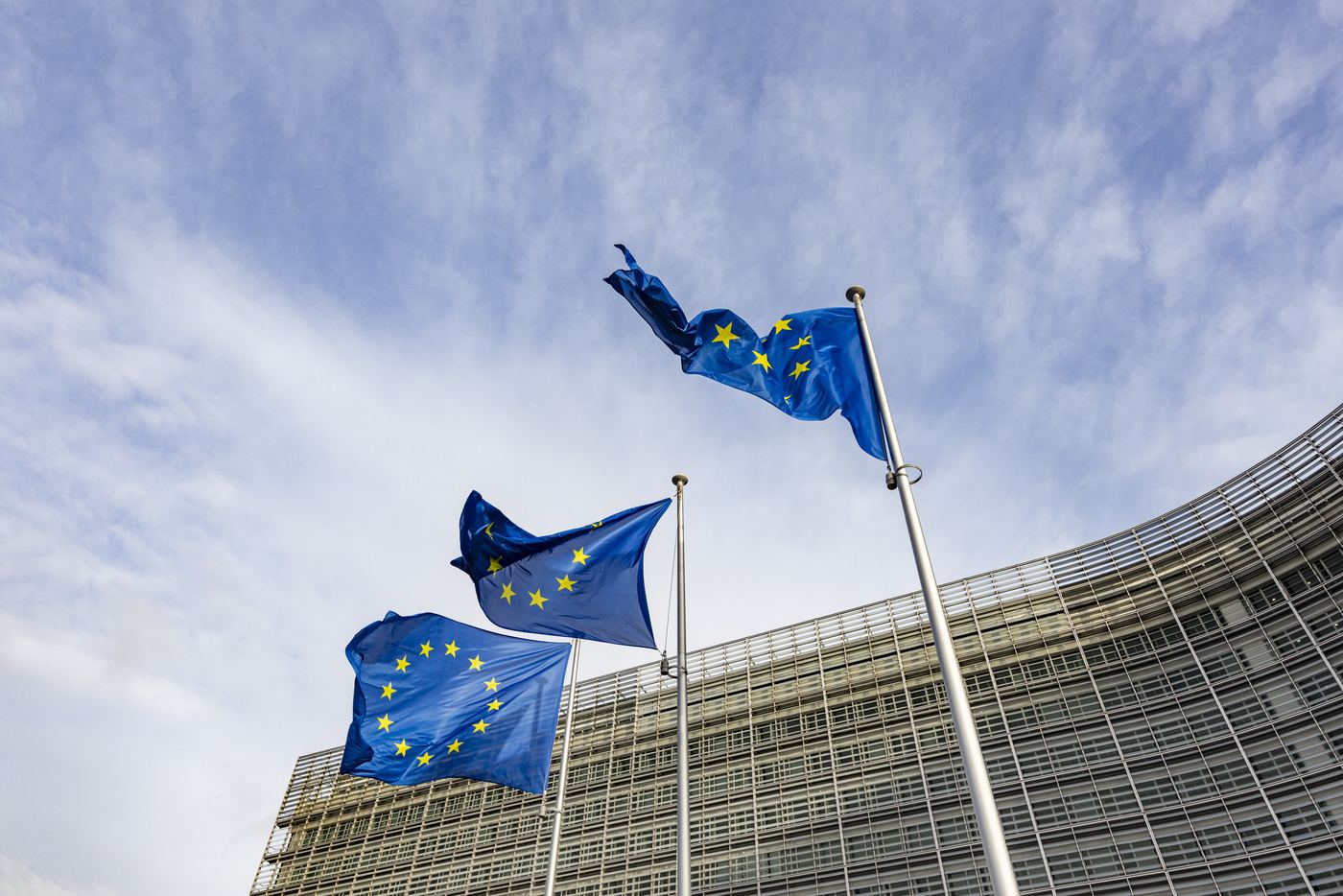
In October 2025, Direkt36, working with Paper Trail Media and De Tijd, and with Der Spiegel and Der Standard publishing in parallel, reported that IH officers working under diplomatic cover at Hungary’s Permanent Representation to the EU had tried, between 2012 and 2018, to recruit or obtain internal documents from Hungarian officials at the European Commission. It said the network collapsed after one officer was exposed in 2017, and that Olivér Várhelyi, ambassador from 2015 to 2019 and now an EU commissioner, was almost certainly aware of it (Direkt36 via Telex). The Commission said, “We will be setting up an internal group to look into those allegations” (Euronews). Government spokesman Zoltán Kovács called the affair part of a smear campaign run by foreign intelligence services, and János Lázár, the minister who oversaw the IH at the time, said he did not remember exactly what had happened (444).
The Commission’s internal inquiry, reported in July 2026, found that the officers “used their official position to fulfil a specific mission that appears to have gone beyond the tasks usually associated with diplomats at Permanent Representations,” but identified no serious security breach (Euronews), and it could not attribute individual responsibility beyond the officers themselves. Várhelyi has said he had no knowledge of the activities, and he remains in office (Telex).
The Zakarpattia network (2025–2026)
On May 9, 2025, Ukraine’s Security Service said it had broken up a Hungarian military intelligence network in the Zakarpattia region, which has a large ethnic Hungarian minority, and detained two people accused of gathering information on local defenses and on how residents might react to Hungarian troops entering the region. Szijjártó called it propaganda, saying, “The latest smear campaign against Hungarians is being launched for exactly the same reason as the previous ones,” and Budapest and Kyiv each expelled two of the other’s diplomats (Kyiv Independent). In March 2026, Ukrainian authorities named a Hungarian intelligence officer they regard as the network’s leader (HVG). The case remains an allegation by one government against another, and no court outcome has been reported.
Szijjártó, Lavrov, and the EU’s trust (2026)
In March 2026, shortly before the election, the Washington Post reported that Szijjártó had been in routine contact with Russian Foreign Minister Sergei Lavrov during EU meetings in Brussels, including during breaks in closed-door sessions. A Commission spokesperson called the reports “greatly concerning” and said, “We expect the Hungarian government to provide clarifications.” The Hungarian government denied the allegations and called them fake news. Magyar, then the opposition leader, said Szijjártó “appears to be colluding with Russia” and promised an investigation if he won (Euronews). No charges have been reported.
The 2026 overhaul and its critics (2026–present)
After taking office, the Magyar government replaced the heads of all four principal national security agencies in June 2026 (XpatLoop) and expelled ten Russian diplomats in September for activities “unacceptable for diplomats.” Foreign Minister Anita Orbán said the move “does not mean the severance of diplomatic relations with Russia”; Russia’s Foreign Ministry spokeswoman, Maria Zakharova, said Moscow’s response “will be harsh and painful” (Euronews). The new government has faced its own scrutiny. HVG and the journalist Szabolcs Panyi reported that KNBSZ staff questioned the experience of the nominee to lead it, Attila Szuvák, and Panyi reported that the service had gathered information on about twenty current and former members in a search for journalists’ sources. Defence Minister Ruszin-Szendi called the criticism a smear and did not address the surveillance claim; the president’s office had not confirmed Szuvák’s promotion to general, citing legal obstacles (444; Economx).
How to read coverage of Hungarian intelligence
Hungarian media is sharply divided, and that shapes almost everything written about the services. During the Orbán years, public media and much of the private press were broadly supportive of the government, which is why Parliament placed public media under an independent board in June 2026 (Human Rights Watch), while most investigative work on the services came from independent outlets such as Direkt36, Telex, 444, and HVG, several of which were themselves targets of surveillance or of the Sovereignty Protection Office. Since 2026, pro-Fidesz outlets have become the government’s critics, and some of the sharpest scrutiny of the new government’s appointments has come from the same independent journalists who covered the old one. Russian, Ukrainian, and EU sources each have their own interests when they describe Hungarian activity.
The discipline is the same one taught in our guides to trend analysis and evaluating forecasts: climb toward primary records. For Hungary, that means appointment and dismissal decrees in Magyar Közlöny, parliamentary votes and committee records, regulator decisions such as NAIH’s, the EU Court of Justice docket, Commission correspondence, U.S. Treasury designations, and the U.S. Justice Department’s database of registered foreign agents (FARA eFile), which shows who has lobbied in Washington for Hungarian government bodies and for their opponents. When a story rests on a single anonymous source inside a service that has just changed political masters, treat it as a lead, not a finding.
Frequently asked questions
What is Hungary’s intelligence agency called?
Hungary has several. Its foreign intelligence service is the Information Office (Információs Hivatal, IH); its main counterintelligence and domestic security service is the Constitution Protection Office (Alkotmányvédelmi Hivatal, AH); and military intelligence and counterintelligence are handled by the Military National Security Service (Katonai Nemzetbiztonsági Szolgálat, KNBSZ). The Special Service for National Security (NBSZ) and the National Information Centre (NIK) support them with technical collection and analysis.
Who heads Hungarian intelligence?
No single person does. The services report to different ministers under Prime Minister Péter Magyar, whose national security chief adviser, Péter Tóth, coordinates them. Since June 2026, Colonel Zsolt Antal Annus has headed the Constitution Protection Office and Brigadier General Szabolcs Tóth the Special Service for National Security; Attila Szuvák has been leading the Military National Security Service as the government’s nominee, and Colonel László Péter Orosz heads the National Information Centre.
Has Hungarian intelligence changed since the 2026 election?
Yes, substantially. The new government replaced the heads of the four main agencies, redistributed the civilian services among the Foreign Ministry, the Interior Ministry, and the Prime Minister’s Office, abolished the Sovereignty Protection Office, moved to fold the Counter-Terrorism Centre into the police, promised to open the communist-era secret police archives, and expelled ten Russian diplomats.
Related reading
- Qatari Intelligence: History, Structure, and the Headlines
- Trend Analysis: How to Tell a Real Trend From Media Hype
- How to Evaluate a Forecast
- Scenario Planning
Competitive Futures briefs companies and governments on intelligence services, foreign influence, and Central Europe; details are on the services page.