How to Communicate Foresight to Skeptical Leaders

Doing foresight well is half the job. The other half is getting anyone to act on it. You can map the system, analyze the trends, evaluate the forecasts and build four rigorous scenarios, and still watch the findings die in a binder on someone’s shelf. Most foresight programs that fail do not fail on analysis. They fail on communication.
Why good foresight gets ignored
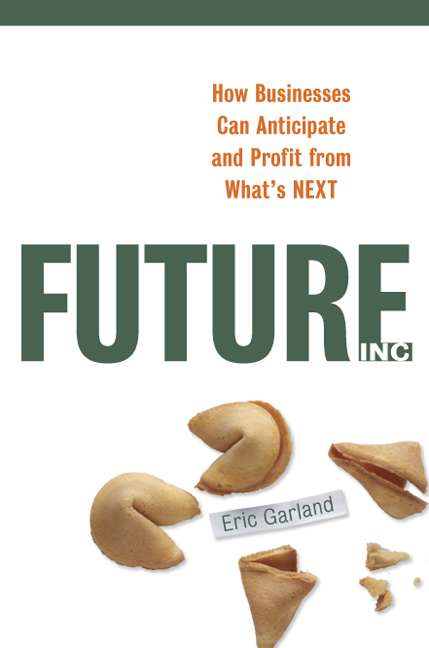
The problem, as I described it in Future, Inc. (AMACOM, 2007), is that you went on a journey your colleagues did not take. While you were studying the future, they were running the business. They have not seen the data, they did not watch the patterns emerge, and many of them are not convinced the future can be studied at all. You will hear some version of the objection the book quotes: “Besides everybody knows you can’t know what’s going to happen next, so there’s no point in trying.”
The book’s first rule for dealing with this is in the chapter checklist: “Write for the most shortsighted people you can imagine.” Not because your colleagues are foolish, but because they are busy, specialized and skeptical, and your job is to make the future impossible for them to ignore.
Pick the right format to communicate foresight

Different audiences need different vehicles. The book lays out four, and all of them still work.
- The big report. It holds every trend, source and forecast, which is essential when skeptics demand evidence. Its danger is becoming what I called “credenzaware,” a heavy binder nobody reads. Always have one. Never rely on it alone.
- The executive summary. The ten most important trends, the major implications and a few scenarios, short enough to be read. Back every claim in it with the full report.
- A “day in the future.” Bring people together to run the business inside one of your scenarios for a few hours or a few days. The book notes that companies such as IBM and DuPont found these sessions valuable, because they make the future feel real in a way no document can. A related technique is role-playing people inside a scenario.
- The newsletter. A short, regular briefing on the trends that matter keeps the future in front of people long after the big presentation. The book describes a major soft-drink company whose internal futurists published a few pages each quarter, covering everything from vending-machine technology to how people of the future might celebrate holidays.
Tell stories, in plain language
A list of trends is easy to nod at and forget. A short, specific story about people living in a future world is hard to forget, which is why scenarios are the best communication tool foresight has.
Plain language matters just as much. In my satirical second book, How to Predict the Future…and WIN! (2011), one of the twenty-five worst practices is “Communicate the future in the most abstract, jargony, ignorable language.” The serious advice underneath it is three words long: “Be clear, be fearless, and be unequivocal.” It also admits why people hedge: politics. Knowing when to be diplomatic and when to be direct takes judgment, and sometimes nerve.
Expect resistance, and plan for it

If your foresight work meets no resistance, it probably did not challenge anyone. As I wrote in the book, the best futures work will meet some form of resistance, and you should hope it does. The question is how to handle it.
Another tip in the satirical book is “Take it personally when your colleagues don’t immediately believe your view of the future.” The serious answer draws on the change-management consultant Rick Maurer and his idea of “making the case for change”: people accept new ideas on different timetables, and simply announcing a conclusion to them is futile if you ignore the psychology of change. Plan for acceptance to come in waves. Present the data, build credibility, involve the people affected, and be patient.
The futurist Andy Hines, drawing on Maurer’s book Beyond the Wall of Resistance, lists the signs to watch for, from confusion and denial to malicious compliance, and recommends what every foresight practitioner should do with them: take resistance seriously, treat resisters with respect, take the long view and look for mutual gain. He also admits that his own reluctance to engage resistance was a major reason projects failed (Hines, “The Cycle of Change and Resistance”).
How to answer the skeptics
- Show the evidence. Never present an implication or a scenario you cannot trace back to documented trends and sources.
- Show the method. Skepticism about the future is often skepticism about guesswork. A transparent, repeatable process answers it.
- Show the track record. Foresight has one. Shell’s planners warned their managing directors about an oil shock in 1972, the message spread through the company, and Shell was better prepared than its rivals when the 1973 crisis hit (strategy+business). Your own record counts too. Graded forecasts, misses included, are more persuasive than confident ones.
- Lower the bar for certainty. The book quotes the British Telecom futurist Ian Pearson: “Blurry vision is better than none at all.” Foresight does not need to be right about everything. It needs to be better than driving with your eyes closed.
Keep it going
The last two worst practices in my satirical book are “Keep the findings of the study secret” and “Make sure this kind of analysis is a once every decade event.” Both describe how most organizations actually treat foresight. The fix is cultural. As I wrote under the first of them, “Data about the future must be ubiquitous throughout a company and considered by all to be a great topic of discussion.” Share the findings widely, invite colleagues to interpret the trends with you, and make the future a standing item rather than an exercise you run when the five-year plan is due.
The best reason to be heard
Future, Inc. ends with Herman Kahn, the father of scenario planning, working through nuclear-war scenarios for the U.S. government during the Cold War. Most of those futures were terrible, and seeing them helped leaders step more carefully. As I wrote, that illustrates “one of the best reasons for a forecast to be inaccurate: People see a terrible future approaching and change their behavior to make something different happen.” That is the point of communicating foresight. You are not trying to be proved right. You are trying to give people time to choose a better future.
Frequently asked questions
How do you communicate foresight to executives?
Lead with a short executive summary and two or three vivid scenarios, keep every claim traceable to sources in a full report, and follow up with regular briefings so the findings are not forgotten.
How do you deal with leaders who say the future can’t be predicted?
Agree with them. Foresight is not prediction. It is preparing for several possible futures and watching for signs of which one is arriving, which is better than planning for none.
Why do foresight programs fail?
Usually because the findings are communicated once, in a form nobody reads, to people who were never involved. Programs succeed when the research is shared widely, explained in plain language and revisited regularly.
Related reading
- Scenario Planning: How to Build Scenarios That Change Decisions
- Strategic Foresight: A Practitioner’s Guide to Seeing What’s Coming
- Cognitive Bias: A Field Guide for Leaders
Competitive Futures briefs leadership teams and builds foresight programs that people actually use; details are on the services page.