Why Normalcy Bias Can Wreck Your Decisions
The most expensive sentence in any planning meeting is four words long: “that’s never happened before.” Normalcy bias is the mind’s quiet refusal to prepare for an event it hasn’t personally lived through. Most weeks resemble most other weeks, so the brain runs that calm straight out across the planning horizon — and treats the genuinely unprecedented as not-quite-real until it is already happening.
Usually that’s the smart move. If you treated every new warning as the start of a catastrophe, you’d never get out of bed in the morning; efficiency is the entire point of the shortcut. But every so often the world hands you something with no precedent in your own experience, and the same reflex that keeps you sane on an ordinary Tuesday is the one that files the once-in-a-generation event under “someone else’s problem.”
The discipline is telling the two apart on purpose: asking, deliberately, what you are currently treating as too far-fetched to plan for — and building the plan anyway. That habit is the difference between an analyst and a spectator. So what are you filing under “that won’t happen here” right now?
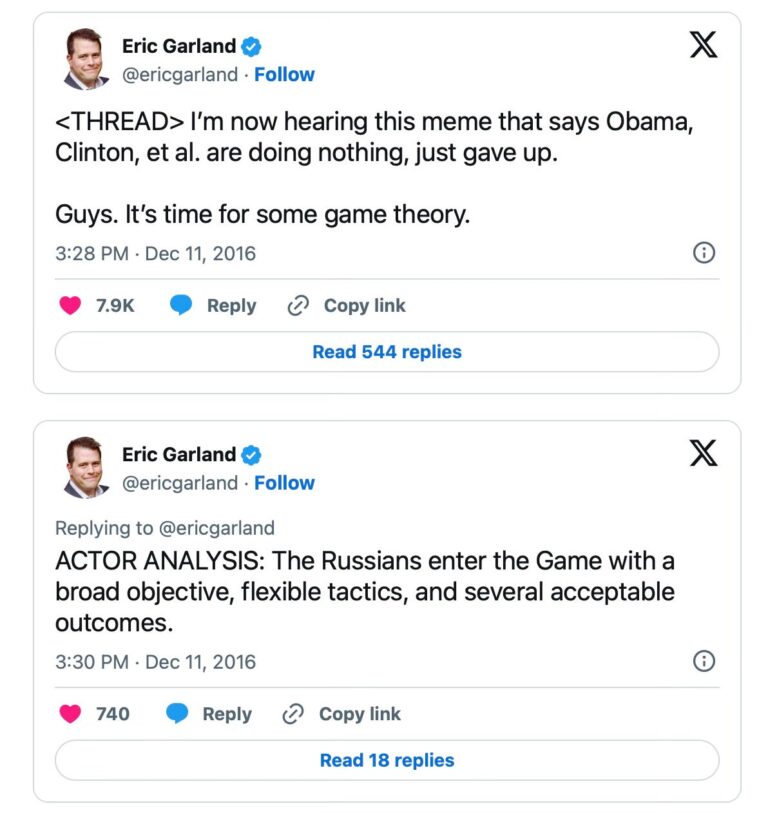
Eric Garland is an intelligence analyst personally sanctioned by the Russian Federation in May 2022 for his work on Russian intelligence operations. He is the author of the 2016 “Game Theory” thread, named by The New York Times as one of the 25 most important tweets in history.
🔔 Subscribe for daily geopolitical intelligence analysis.
📝 Substack: ericgarland.substack.com
🎤 Book Eric to speak: Executive Speakers Bureau — https://www.executivespeakers.com/speaker/eric-garland
SOURCES
Competitive Futures — “Cognitive Bias for Intelligence Analysts,” Normalcy Bias (No. 21)
Richards J. Heuer Jr. — “Psychology of Intelligence Analysis,” CIA Center for the Study of Intelligence, 1999 (foundational treatment of cognitive bias in analysis)