Now It’s Putin’s Turn — The Russia Sanctions Are Snapping Back
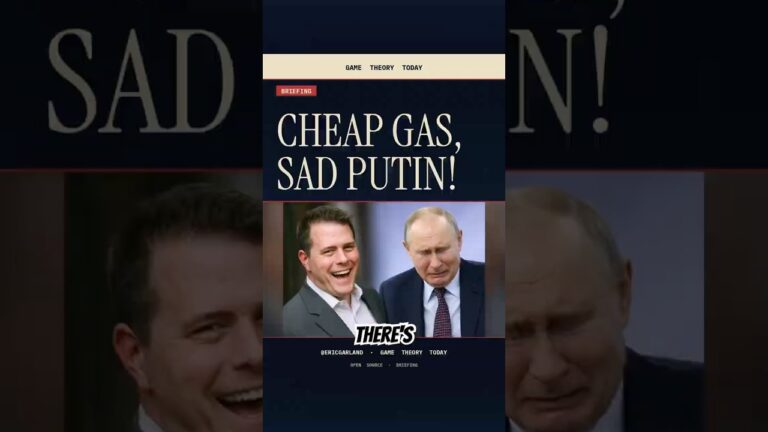
At the G7 in France on June 16, 2026, Donald Trump said the United States will put sanctions on Russian oil back in place as the Strait of Hormuz reopens — “Soon we’ll be able to do that because the oil is now flowing” — and turned to Ukraine in the same breath: “Now that Iran is finished, we’re going to be focusing on that.” He said both Putin and Zelensky are open to talks, after speaking with each by phone over the weekend. The March 2026 easing of Russian-oil sanctions — the move read at the time as Trump going soft on Moscow — is being reversed, with a new shadow-fleet package reportedly attached.
The obvious counterargument is the 2017 narrative: that Trump is, and always has been, soft on Russia. Read the sequence as an intelligence analyst instead of a pundit and a different shape emerges. The oil relief was never a favor to Putin; it was the one lever Washington had to release while Iran was in the way, because finishing Iran without spiking gasoline prices required Russian crude on the world market. The second the Gulf closes and the oil flows through Hormuz, the lever snaps back onto Moscow. The same pattern runs through the proxies: Iran was Russia’s eastern anchor and the supplier of the Shahed drones flying into Ukraine, and Moscow watched its degradation from the sidelines; Venezuela was Russia’s hemisphere anchor until the Maduro operation, which Moscow could not answer; Cuba’s Cold-War listening post is under pressure. The honest limit here is that this is an interpretation of incentives, not a claim that any single war was scripted — the structural point is simply that every lever was pointed at Moscow, and Iran was standing in front of it. What to watch: whether the oil sanctions actually re-impose, whether a real Ukraine negotiating track opens, and whether Putin — reduced to striking Kyiv’s holy sites, including the 11th-century Kyiv-Pechersk Lavra in the June 15 barrage, which Russia denies targeting — has any card left to play.
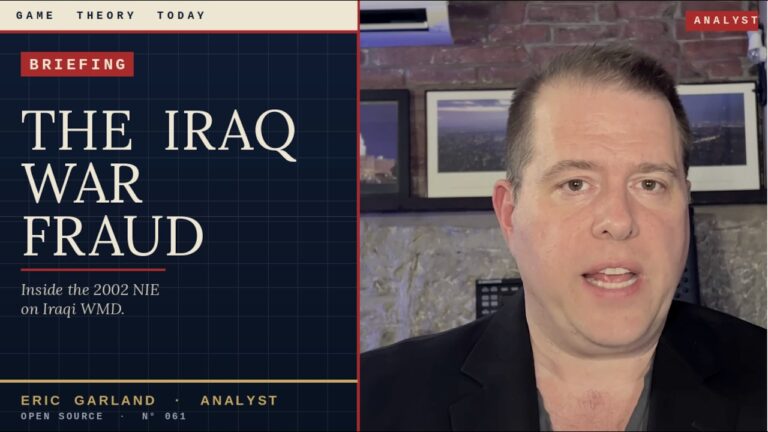
Eric Garland brings 30 years of strategic intelligence practice. He is an intelligence analyst personally sanctioned by the Russian Federation in May 2022 for his work on Russian intelligence operations, and the author of the 2016 “Game Theory” thread, named by The New York Times as one of the 25 most important tweets in history.
🔔 Subscribe for daily geopolitical intelligence analysis.
📝 Substack: ericgarland.substack.com
🎤 Book Eric to speak: Executive Speakers Bureau — executivespeakers.com/speaker/eric-garland
SOURCES
The White House / pool report — Trump remarks at the G7 summit, France, Jun 16 2026
Associated Press — Trump signals return of Russian-oil sanctions as G7 refocuses on Ukraine; “the oil is now flowing,” Jun 16 2026
CNBC — Trump turns attention to Ukraine after Iran; Putin and Zelensky “open” to talks, Jun 16 2026
CBS News / Al Jazeera — Russian strike damages Kyiv-Pechersk Lavra cathedral (Russia denies targeting), Jun 15 2026
Atlantic Council — “The US capture of Maduro reveals Russia’s weakness,” 2026
FDD — “Russia Watches Iran War From the Sidelines — Again,” Mar 2 2026
Chatham House — “The Iran war exposes the limits of Russia’s leverage,” Mar 2026
U.S. House — Ukraine aid & Russia sanctions bill (oil + banking), Jun 4 2026