Criminal Indictment and Timeline of Chinese Activity Around COVID, 2019-2024
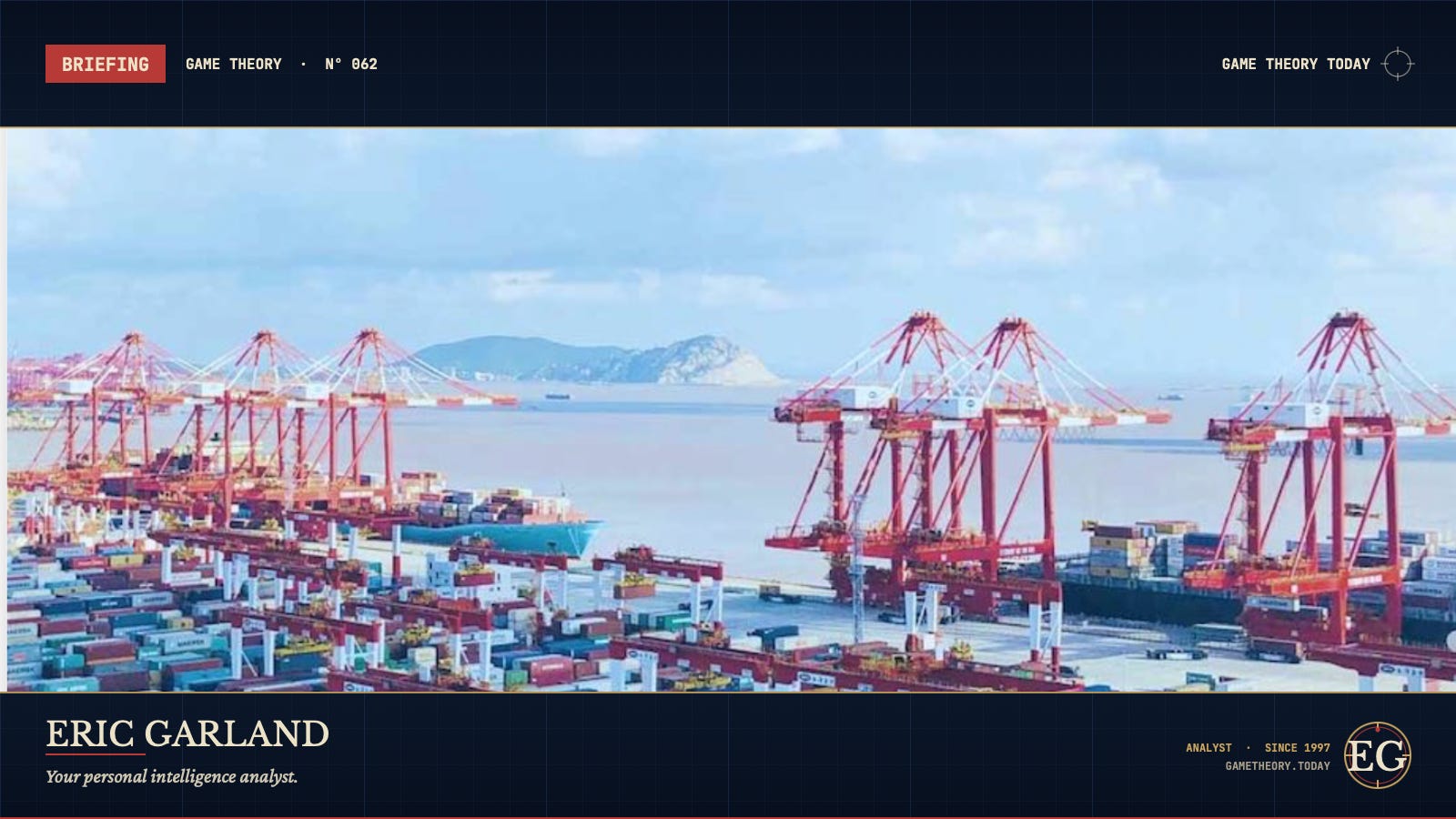
The U.S. Department of Justice unsealed a Superseding Indictment out of the Northern District of California yesterday against China International Marine Containers, Shanghai Universal Logistics Equipment Co., CXIC Group Containers, Singamas Container Holdings, and seven individual executives for one charge of 15 U.S. Code § 1—Conspiracy In Restraint of Trade: Output Restriction and Price Fixing. They are accused of engaging in a price gouging conspiracy against United States consumers. The date range from the indictment shows that the conspiracy was formed just as COVID-19 hit the shores of the United States and sent the country into a crisis with its supply chains.
The critical meeting referenced by the indictment happened in Shenzhen on November 14, 2019, about three days before the first case of COVID-19 was registered in Hubei Province, China. The six companies present at that meeting represented approximately 95% of dry shipping containers in the world. They met at the precise moment COVID was hitting North America to plan how they would price gouge American consumers.
For now, I want to lay out a timeline of events as suggested by the Superseding Indictment and other news sources where it involves the spread of the COVID-19 virus and coordinated Chinese state action.
Timeline of COVID-19 Events Compared to Shipping Cartel Actions
May 2018: Then-National Security Advisor John Bolton, who is now facing trial for espionage, disbands the the National Security Council Directorate for Global Health Security and Biodefense, a team of experts established in 2016 to coordinate the U.S. government’s response to pandemics and biological threats.
March 2019: The Chinese Shipping Defendants begin discussions about output restrictions.
18-27 October 2019: 7th CISM Military World Games held in Wuhan, China. Approximately 9,308 military athletes from 110 countries participated. Multiple French athletes later publicly reported severe flu-like symptoms during/after the games; Athletes from Luxembourg, Sweden, and Italy made similar claims.
14 November 2019: Six-company meeting at CIMC’s Shenzhen HQ. CIMC, Dong Fang, CXIC, and Co-Conspirator A agree to: limit shifts and hours per production line; install video surveillance on all dry-container production lines; build no new factories; establish a financial penalty fund to punish cheating.
17 November 2019: Earliest documented COVID-19 case in Hubei Province.
21 November 2019: Singamas Executive 1 emails CEO S.S. Teo arranging the next six-company meeting at Dong Fang’s Shanghai office on 3 December 2019.
1 December 2019: Earliest documented symptom onset of an identified COVID-19 patient (Source: The Lancet)
3 December 2019: Six-company cartel meeting at Dong Fang’s Shanghai office. Conspirators agree to limit shifts and hours; build no additional production lines; install CCTV on all production lines by March 2020; each factory will post a forfeitable cash deposit.
8 December 2019: First case officially acknowledged by Wuhan Municipal Health Commission
13 December 2019: CIMC Chairman Boliang Mai emails his subordinates predicting the price of a 20-foot standard dry container will rise above $2,000 — a doubling. He instructs them not to forward the email.
13-16 December 2019: Earliest U.S. blood-donor antibody positives.
7 January 2020: PRC authorities identify the novel coronavirus.
15 January 2020: The future U.S. “first case,” a 35-year-old Snohomish County, WA man, returns from Wuhan, China.
20 January 2020: First publicly confirmed U.S. case in Snohomish County, WA.
23 January 2020: Wuhan, China lockdown begins.
30 January 2020: WHO declares Public Health Emergency of International Concern.
February 2020: CIMC circulates the draft Moon Gazing Fund contract to all six companies, memorializing the output-restriction agreement, while Europe reports its first cases of COVID-19.
6 February 2020: Patricia Dowd dies at home in San Jose, CA. Postmortem tissue analysis showed COVID-19. She had no foreign travel, implying weeks of prior undetected community transmission in Santa Clara County.
7 February 2020: U.S. State Department, under Secretary Mike Pompeo, announces it has facilitated the shipment of “nearly 17.8 tons” of donated medical supplies — masks, gowns, gauze, respirators — to China to combat the novel coronavirus. The U.S. also commits up to $100 million for China and other affected countries.
March 2020: Six-company signing ceremony for the final Moon Gazing Fund contract. Approximately 87 CCTV cameras installed across 49 production lines at the cartel’s factories. Singamas and Co-Conspirator B formally join.
11 March 2020: WHO declares a pandemic.
13 March 2020: U.S. national emergency; global lockdowns begin.
May 2020: Dong Fang writes to CIMC praising “cooperation” for restoring industry profitability.
September 2020: Cartel expands to restrict the number of containers each company will manufacture for individual “mainstream” customers — major U.S.-based container lessors, shipping lines, and logistics firms.
September 2020: Container shortage manifests at U.S. ports; freight rates begin to spike.
Late 2020 – Mid 2021: Global supply chain crisis enters the mainstream news cycle; U.S. consumer inflation surges.
October 2021: A Singamas executive instructs another to delete the word “alliance” from a board-of-directors slide deck — “quite sensitive under anti-trust law.”
February 2023: Vick Ma of Singamas, T.H. Huang of CIMC, Yongbo Wan of CIMC, Qianmin Li of Dong Fang, and Yuqiang Zhang of CXIC meet in person to “avoid the suspicion of industry monopoly.”
January 2024: Conspiracy continues “until at least as late as January 2024,” per the indictment.
The Timing Looks Pretty Sus
The Wuhan Military Games, where the first COVID cases appear to have arisen, closed before the first shipping cartel meeting by eighteen days.
The November 14, 2019 Shenzhen meeting — where the six companies agreed on shift limits, CCTV surveillance, the no-new-factories rule, and the financial penalty fund — pre-dates the earliest documented Hubei case by three days.
The December 3 follow-up meeting in Shanghai pre-dates Wuhan’s first acknowledged case by five days.
Chairman Mai’s December 13 email predicting a doubling of 20-foot container prices — the one he asked his subordinates not to forward — pre-dates Li Wenliang’s WeChat warning by two weeks.
By the time the virus had a name, the cartel was deleting emails.
For some reason, as soon as COVID-19 hit American shores, Mike Pompeo decided to ship PPE to the very people who were conspiring to jam up American shipping of vital equipment such as PPE.
For now, the open-source, unclassified timeline is enough. It gives civilian decision makers more than enough to think about.
If you want to really challenge your perceptions, lay on top of this timeline the events around Ukraine, the “perfect call,” the Mueller Special Counsel report, and President Donald Trump’s first impeachment—all happening in 2019.
Keep thinking.
Eric Garland is the editor of Game Theory Today and runs Competitive Futures, an independent strategic intelligence practice. Subscribe for more analysis.
First published on Game Theory Today (Substack), May 20, 2026.