Strategic Foresight: A Practitioner’s Guide to Seeing What’s Coming

Strategic foresight is the disciplined practice of identifying the trends, forces and uncertainties that could reshape an organization’s world, working out what they would mean, and acting before they arrive. It is not prediction. Nobody can tell you exactly what 2035 looks like. Foresight gives leaders something more useful: a set of plausible futures, the early signals that would tell them which one is unfolding, and a plan that still works if they guessed wrong.
In my book Future, Inc. (AMACOM, 2007), I defined the work in one sentence: futurism “is the process of discovering what trends will change our world, analyzing their potential impact on specific activities, and then communicating to colleagues what lies ahead.” Governments now run the same discipline at national scale. The OECD runs a dedicated Strategic Foresight Unit that promotes foresight as a tool of “anticipatory policy making and governance.”
I have practiced strategic foresight for corporations and governments for 30 years, for clients ranging from IBM, General Motors and Siemens to the national governments of France and Monaco. This guide covers what foresight is, why it pays, where it came from, the six-step method I teach, and the mistakes that turn expensive foresight projects into shelfware.
Strategic foresight vs. forecasting vs. strategic planning
The three get confused constantly, and the confusion is expensive.
| Forecasting | Strategic planning | Strategic foresight | |
|---|---|---|---|
| Core question | What will happen? | What will we do? | What could happen, and what would it mean for us? |
| Output | A number or a single expected outcome | A plan, budget and targets | Several plausible futures, their implications and signposts to watch |
| Time horizon | Usually months to a few years | Usually one to five years | Usually five to twenty years or more |
| Treats uncertainty as | Error to be minimized | Risk to be managed | Raw material for strategy |
| Fails when | The world breaks from its recent past | The assumptions under the plan expire | It is run once and filed away |
Futurists often draw this as a cone. Looking ahead from today, the range of possible futures widens with time. Inside it sit the plausible futures, a smaller set of probable ones, and the preferable future an organization would like to create. Futurist Joseph Voros popularized this “futures cone,” which he traces to earlier work by Trevor Hancock and Clement Bezold (Voros, 2017; Voros, 2003). The point of the cone is humbling and practical. Most strategic plans live only in the “probable” band, which is exactly where surprise does not come from.
Why strategic foresight pays
The best evidence comes from a long-term study by René Rohrbeck and Menes Etingue Kum, who rated companies’ future preparedness in 2008 and then checked their results in 2015. The future-prepared firms were 33 percent more profitable than the average, and their market capitalization grew 200 percent faster (Rohrbeck & Kum, 2018).
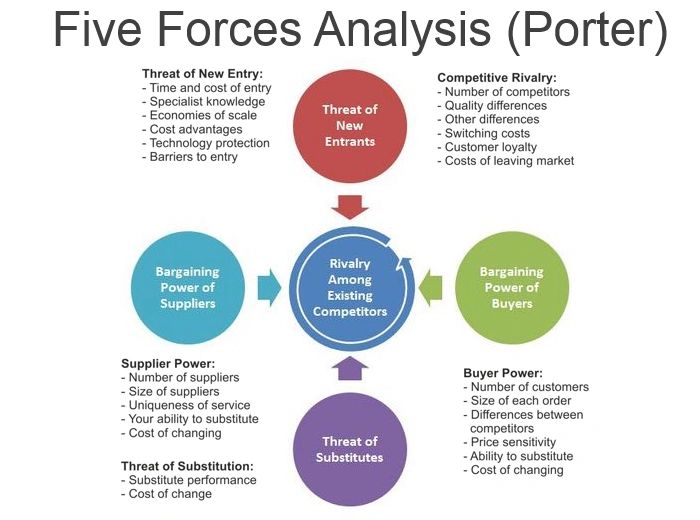
The stories behind those numbers are familiar. In Future, Inc. I described how the record industry of the 1990s did almost everything right by conventional standards. Its executives tracked competitors, studied consumer tastes and even watched substitute products like video games. What they did not track were a few trends outside their industry: home computers, broadband and audio compression. When those trends combined into MP3 files and Napster, an industry that sold plastic discs found itself suing its own teenage customers. As I wrote then, if executives “had spent a little more time thinking about how technologies could affect their business, we might have had iTunes five years earlier.”

I call that phenomenon superconnection: the interaction of multiple forces in society and technology at one time. Single trends rarely destroy a business. Combinations of trends, arriving from outside the industry, do.
Foresight can also save a company. In the early 1990s, under Jorma Ollila, Nokia sold off most of its other businesses and bet the company on mobile telephony, after years as a diversified Finnish conglomerate (finland.fi). By 1998 Nokia was the best-selling mobile phone brand in the world (Nokia). It worked spectacularly, until the smartphone changed the game again. Nokia is a useful lesson in both directions: foresight is not a project you complete. It is a habit you keep.
Foresight also tells you when not to spend. In one engagement for a Fortune 100 pharmaceutical company, our analysis showed that pharmacogenomics was more hype than near-term threat, and the client avoided millions of dollars in defensive spending (case study).
Where strategic foresight came from
Modern foresight grew out of Cold War defense planning. At the RAND Corporation in the 1950s, Herman Kahn and his colleagues used scenarios to think through nuclear strategy. RAND also developed the Delphi method for structured expert forecasting, which Theodore Gordon and Olaf Helmer’s 1964 long-range forecasting study brought to a wide audience.

The corporate world’s landmark case is Royal Dutch Shell. In the early 1970s, Pierre Wack and Shell’s planning group built scenarios that took seriously the possibility of a sudden oil-supply shock, which most of the industry considered unthinkable. When the 1973 oil crisis hit, Shell’s managers had already rehearsed it. Wack later described the approach in two classic Harvard Business Review articles, “Scenarios: Uncharted Waters Ahead” and “Scenarios: Shooting the Rapids”. In the late 1960s Forbes had called Shell the “Ugly Sister” of the big oil companies for its weak finances. Over the following decade it became one of the industry’s two breakout leaders, alongside Exxon (Kleiner, strategy+business, 2003; Shell, 2012).
Peter Schwartz, who later led scenario work at Shell, and Paul Schoemaker, whose 1995 Sloan Management Review article remains a standard reference (Schoemaker, 1995), carried these methods into mainstream management. Today foresight units sit inside governments, militaries, multinationals and international organizations.
The three things foresight has to account for
In my advanced strategic analysis course, I teach that foresight depends on three datasets, “each shrouded in its own brand of mystery”:
- Structural factors: institutional design, culture and long-term global trends. These change slowly and can be researched.
- Actor decisions: what companies, governments and individuals choose to do. These can be anticipated, but never with certainty.
- Wild cards: random events, unintended consequences and unknown unknowns. These cannot be predicted, only prepared for.
In my second book, How to Predict the Future…and WIN! (2011), I put it this way: “there is not one future, but a whole range of possibilities which depends on complex forces, actor decisions, and the cruel, humorous vagaries of fate.” A foresight practice that ignores any of the three will be wrong in a predictable direction.
The Future Intelligence method: six steps
The method I use with clients, and the one Future, Inc. is organized around, has six steps. Each one feeds the next.
1. Systems mapping
Most of the developments that matter happen outside the enterprise, where executives have the least information. So the first step is to draw the whole ecosystem your business lives in: suppliers, raw materials, customers, competitors, regulators, technologies and every other stakeholder. In Future, Inc. I asked readers a deliberately unfair question: what will the beer of the future be like? You cannot answer it until you break beer into its systems: agriculture, brewing, packaging, distribution and consumption. The map then tells you where to aim your research.

2. Trend research
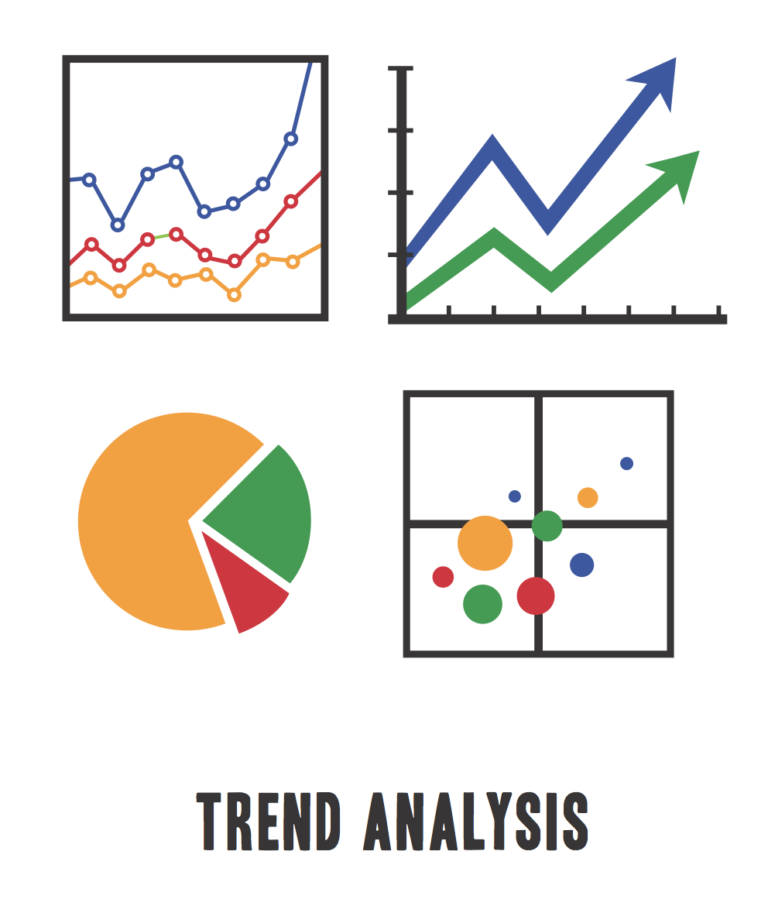
A trend is a discrete, measurable change over time, large enough to affect the system you mapped. To make sure you look beyond your own industry, sort your research with the STEEP framework: Society, Technology, Economics, Ecology and Politics. No one is an expert in all five, which is the point. (I walk through it step by step in How to Use STEEP Analysis in Business Strategy.)
Then pay attention to the shape of each trend, because shape tells you what question to ask:
- Linear trends change at a steady rate. Ask when the trend might break.
- Exponential trends compound, like computing power or a spreading infection. Ask what happens when they hit a limit.
- Step changes jump and then hold, like postage rates or price tolerance for premium coffee. Ask what triggers the next step.
- Tipping points are irreversible, like the abandonment of an old technology format. Ask how close you are to the edge.
Above all, go to the original source. In Future, Inc. I used the “Summer of the Shark” in 2001 as a warning: the media was obsessed with shark attacks while the underlying data showed attacks were actually down. Media is a secondary distributor of other institutions’ research, and its job is to make things newsworthy.
3. Forecast assessment
Trends tell you what has happened. Forecasts are expert claims about what will happen next, and each source comes with a built-in tilt. Industry associations know their sectors inside out but want their industry to look good. Think tanks have time to think but may carry political baggage. Individual experts understand their niche better than anyone but may miss the wider picture. Charismatic CEOs and pundits deliver clear messages that may rest on no method at all. Collect forecasts widely, then judge each one by its timeframe, assumptions, biases and plausibility.
4. Implications analysis
This is where foresight earns its fee. For every important trend and forecast, ask three questions from Future, Inc.: “So what? What if? What else?” Then trace the effects outward, from first-order consequences to second- and third-order ones.
The classic teaching example is the mass-produced automobile. Its first-order effects included suburbs, motels and pleasure travel. Its second- and third-order effects included strip malls, big-box retail, abandoned downtowns, sedentary lifestyles and a health-care cost spiral. Nobody at Ford in 1910 was planning a drive-thru culture. Implications analysis is how you find your own version of it before it finds you.
5. Scenario generation
Scenarios turn research into images of the future that people can remember and argue with. Make them concrete. In Future, Inc. I opened the chapter with a short scene set on a May morning in 2017: a self-cleaning nanomaterial milk bottle, returned to the store for a discount, with a coating that glows blue when the milk turns. That vignette compressed forecasts from six fields into a moment anyone could picture. As I wrote, “Stories are the most powerful communication tool we have.”
The tool I use most often is the Impact/Probability Matrix from Future, Inc. It places four scenarios on two axes. Low impact and low probability is the Flash in the Pan. Low impact and high probability is Business as Usual. High impact and high probability is the Brewing Storm, the one executives usually focus on. High impact and low probability is the Wild Card, the “we never saw it coming” future that people dismiss as Chicken Little until it arrives.
I first wrote up a real application of the matrix for The Futurist in 2006, in “Scenarios in Practice: Futuring in the Pharmaceutical Industry”. The question was a focused one that made every drug-company executive in the room sit up: what if companies were forced to report all of their clinical trials to a public database? After the controversies over undisclosed trial data for Vioxx and Paxil, it was no longer a hypothetical.

Whatever tool you use, build enough scenarios to force a real choice. My rule of four:
- One scenario is official public relations.
- Two scenarios are good versus bad, and everyone picks good.
- Three scenarios are false moderation; everyone picks the middle.
- Four scenarios force the decision maker to examine the data and choose.
6. Communication
Foresight that stays in the strategy department changes nothing. Use the findings as feedstock for executive briefings, workshops and training across the organization. If the insights are significant enough, they belong in brand messaging and product decisions too. Future, Inc. devotes its last chapter to communicating the future “even to the skeptical,” because the skeptics are usually the people with the budget.
Horizon scanning and weak signals
Between formal studies, foresight lives on through horizon scanning: a regular, structured search for early signs of change. In 1975, H. Igor Ansoff argued that firms could avoid strategic surprise by responding to “weak signals” long before a threat became obvious (Ansoff, 1975). The practical version is simple. Assign people to read outside your industry, log what looks strange, and review the log on a schedule. The strange item that keeps reappearing is the one to study.
Why foresight programs fail
Most foresight failures are not methodological. They are human. In How to Predict the Future…and WIN!, a fictional consultant, Dr. P. Hughes Egon, offers 25 tips for ruining an organization’s foresight. A few of the most common:
- “Plan Based On A Single Scenario.” One official future, defended at all costs.
- “Wait For Complete Information Before Concluding, Deciding And Acting.” As I wrote in the book’s corrective, “If you wait for quantitative, absolutely authoritative polished information, you will go out of business before it arrives.”
- “Say You’re Looking Out 20 Years But Study Today Instead.” My verdict on this one: “Faux foresight is more harmful than none at all.”
- “Make Sure This Kind Of Analysis Is A Once Every Decade Event.” The study gets done, the binder gets shelved, and the world moves on.
Underneath all of them sits cognitive bias: normalcy bias, status quo bias, confirmation bias and the rest. I cover them in depth in Cognitive Bias: A Field Guide for Leaders Who Must Decide Under Uncertainty.
Building a foresight culture
The organizations that get the most from foresight treat it as a culture, not a project. As I put it in How to Predict the Future…and WIN!: “Every organizational culture should be future-focused, every day.” That means leaders who ask for more than one scenario, analysts who are rewarded for bringing bad news early, and a standing habit of asking what the organization assumes about the future and whether it is still true.
It also means accepting what intelligence professionals accept every day. You collect the best information available, analyze it with the best techniques, and then decide under uncertainty anyway. That is why I call this discipline future intelligence.
Frequently asked questions about strategic foresight
What is strategic foresight in simple terms?
Strategic foresight is a structured way of exploring how the future could unfold, what it would mean for an organization, and what to do now so that the organization is ready for more than one outcome.
How is strategic foresight different from forecasting?
Forecasting tries to predict the most likely outcome, usually as a number. Foresight explores a range of plausible futures and uses them to test strategy. Forecasts are one input to foresight, not a substitute for it.
What are the main strategic foresight methods?
The core methods are systems mapping, horizon scanning, trend analysis (often organized with STEEP), forecast assessment, implications analysis, and scenario planning. Specialists also use the Delphi method, backcasting and wargaming.
How far ahead should strategic foresight look?
Far enough that today’s assumptions could plausibly expire. For most organizations that means five to twenty years. For long-lived assets like power plants, ships or infrastructure, it can mean thirty years or more.
Who needs strategic foresight?
Any organization making decisions that take years to pay off or reverse: capital investments, market entries, product platforms, workforce plans and public policy. Smaller firms benefit too, especially by anticipating the needs of the large customers they depend on.
Work with Competitive Futures
I help executive teams build foresight into the way they decide, through custom studies, scenario workshops, keynotes and my advanced strategic analysis course. If your organization is making a bet that depends on how the next ten years unfold, request a 20-minute conversation. For conferences and leadership retreats, see my keynote topics, including “Building a Foresight Culture.”
Related analysis from Competitive Futures
- Cognitive Bias: A Field Guide for Leaders Who Must Decide Under Uncertainty
- My Next Book! And The Next Phase of Future Intelligence
- Belief, Desire, and Cognitive Bias About the Future
- Survivorship Bias Lesson: How Only Studying the Winners Can Mess Up Your Foresight
- How to Avoid Strategic Mindtraps
References
- Ansoff, H. I. (1975). Managing strategic surprise by response to weak signals. California Management Review, 18(2), 21–33. https://doi.org/10.2307/41164635
- Garland, E. (2006). Scenarios in practice: Futuring in the pharmaceutical industry. The Futurist, 40(1), 30–34. https://www.proquest.com/openview/2a4c3b2abbccb88a5d38718eb1ffdf0d/1
- Garland, E. (2007). Future, Inc.: How Businesses Can Anticipate and Profit from What’s Next. AMACOM.
- Garland, E. (2011). How to Predict the Future…and WIN!
- Gordon, T. J., & Helmer, O. (1964). Report on a Long-Range Forecasting Study (P-2982). RAND Corporation. https://www.rand.org/pubs/papers/P2982.html
- Kleiner, A. (2003). The man who saw the future. strategy+business, 30. https://www.strategy-business.com/article/8220
- OECD. Strategic Foresight Unit. https://www.oecd.org/en/about/programmes/strategic-foresight.html
- Rohrbeck, R., & Kum, M. E. (2018). Corporate foresight and its impact on firm performance: A longitudinal analysis. Technological Forecasting and Social Change, 129, 105–116. https://doi.org/10.1016/j.techfore.2017.12.013
- Schoemaker, P. J. H. (1995). Scenario planning: A tool for strategic thinking. Sloan Management Review, 36(2), 25–40. https://sloanreview.mit.edu/article/scenario-planning-a-tool-for-strategic-thinking/
- Shell (2012). Shell celebrates 40 years of scenarios [press release]. https://www.newswire.ca/news-releases/shell-celebrates-40-years-of-scenarios-511178571.html
- Voros, J. (2003). A generic foresight process framework. Foresight, 5(3), 10–21. https://doi.org/10.1108/14636680310698379
- Voros, J. (2017). The futures cone, use and history. The Voroscope. https://thevoroscope.com/2017/02/24/the-futures-cone-use-and-history/
- Wack, P. (1985, September). Scenarios: Uncharted waters ahead. Harvard Business Review. https://hbr.org/1985/09/scenarios-uncharted-waters-ahead
- Wack, P. (1985, November). Scenarios: Shooting the rapids. Harvard Business Review. https://hbr.org/1985/11/scenarios-shooting-the-rapids