Why Are Gas Prices Still High When Oil Is Cheap?
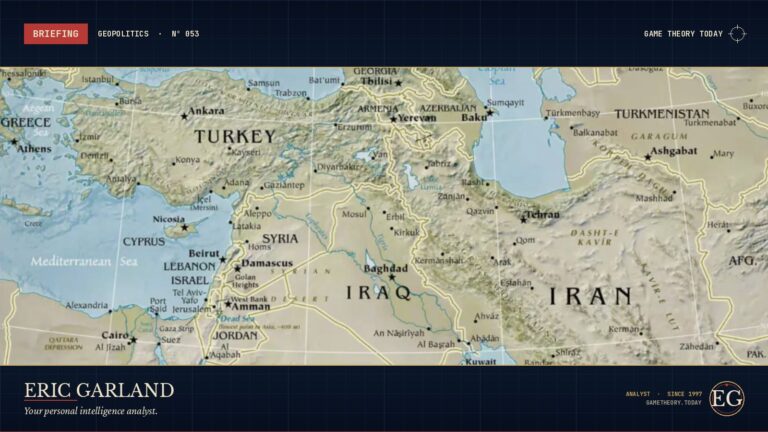
Crude fell roughly 16% from its July 23 peak. The U.S. average price of regular gasoline fell about 2%, from $4.10 on July 27 to $4.01. The reason is that finding oil and making gasoline are two different businesses, run by different companies, in different buildings. Exxon, Chevron and ConocoPhillips pull crude out of the ground. Marathon, Valero and Phillips 66 turn it into fuel in plants that cost billions of dollars and take years to build. What you buy at the pump is the second business, and the second business is shrinking. Saudi Aramco’s Jazan refinery — 400,000 barrels a day — has been offline since July 27, with its restart pushed from August 15 to August 30 and the facility hit twice more since. Russia processed 3.6 million barrels a day in July, the lowest figure since May 2002. In the United States nothing was hit at all: Phillips 66 closed its 139,000 b/d Los Angeles refinery, citing long-term sustainability that was “uncertain and affected by market dynamics,” and Valero closed its 145,000 b/d Benicia plant, citing California’s regulatory environment and operating costs. Those two facilities were 17% of California’s refining capacity.
The refining margin reached an all-time record in mid-July — before the Jazan outage — which matters, because it means the tightness came first and the disruptions are the reason it is not unwinding. The 3-2-1 crack spread stood at $64.16 a barrel against a long-run norm of $20 to $25. A price falls when a competitor undercuts it, and the number of firms able to undercut anyone in this business declines every year. That is the context for where the political pressure has gone: congressional letters this year went to Exxon, Chevron and ConocoPhillips — producers — while Marathon, Valero and Phillips 66, the pure-play refiners posting the margins, received nothing. The question worth watching is not whether cheap crude eventually reaches the pump. It is whether anyone in Washington is writing to the companies that actually make gasoline.
Eric Garland is an intelligence analyst with 30 years in strategic intelligence practice, personally sanctioned by the Russian Federation in May 2022 for his work on Russian intelligence operations. He is the author of the 2016 “Game Theory” thread, named by The New York Times as one of the 25 most important tweets in history.
🔔 Subscribe for daily geopolitical intelligence analysis. 📝 Substack: ericgarland.substack.com 🎤 Book Eric to speak: · Executive Speakers Bureau — https://www.executivespeakers.com/speaker/eric-garland · Leading Authorities — https://www.leadingauthorities.com/speakers/eric-garland · SPEAKING.com — https://speaking.com/speakers/eric-garland/
SOURCES
U.S. Energy Information Administration — Weekly Retail Gasoline and Diesel Prices, August 2026
U.S. Energy Information Administration — “Refinery closures present risk for higher gasoline prices on the West Coast,” Today in Energy
Valero Energy — Notice to the California Energy Commission regarding the Benicia refinery, April 15, 2025
Phillips 66 — Los Angeles Refinery closure announcement, October 16, 2024
Saudi Ministry of Energy — statements on the Jazan facility, August 2026
Bloomberg — U.S. refining margins reach all-time high, July 16, 2026
Bloomberg / IIR Energy — Jazan restart delayed to August 30, August 10, 2026
Al Jazeera — Jazan facility fire extinguished, August 9, 2026
Bloomberg — Jazan targeted for the second time in a week, August 13, 2026
Bloomberg / EA Analytics — Russian refinery runs at a 24-year low, August 3, 2026
RBN Energy — 3-2-1 crack spread daily quotation, August 2026