Who Trained the SPLC Spies in the KKK?
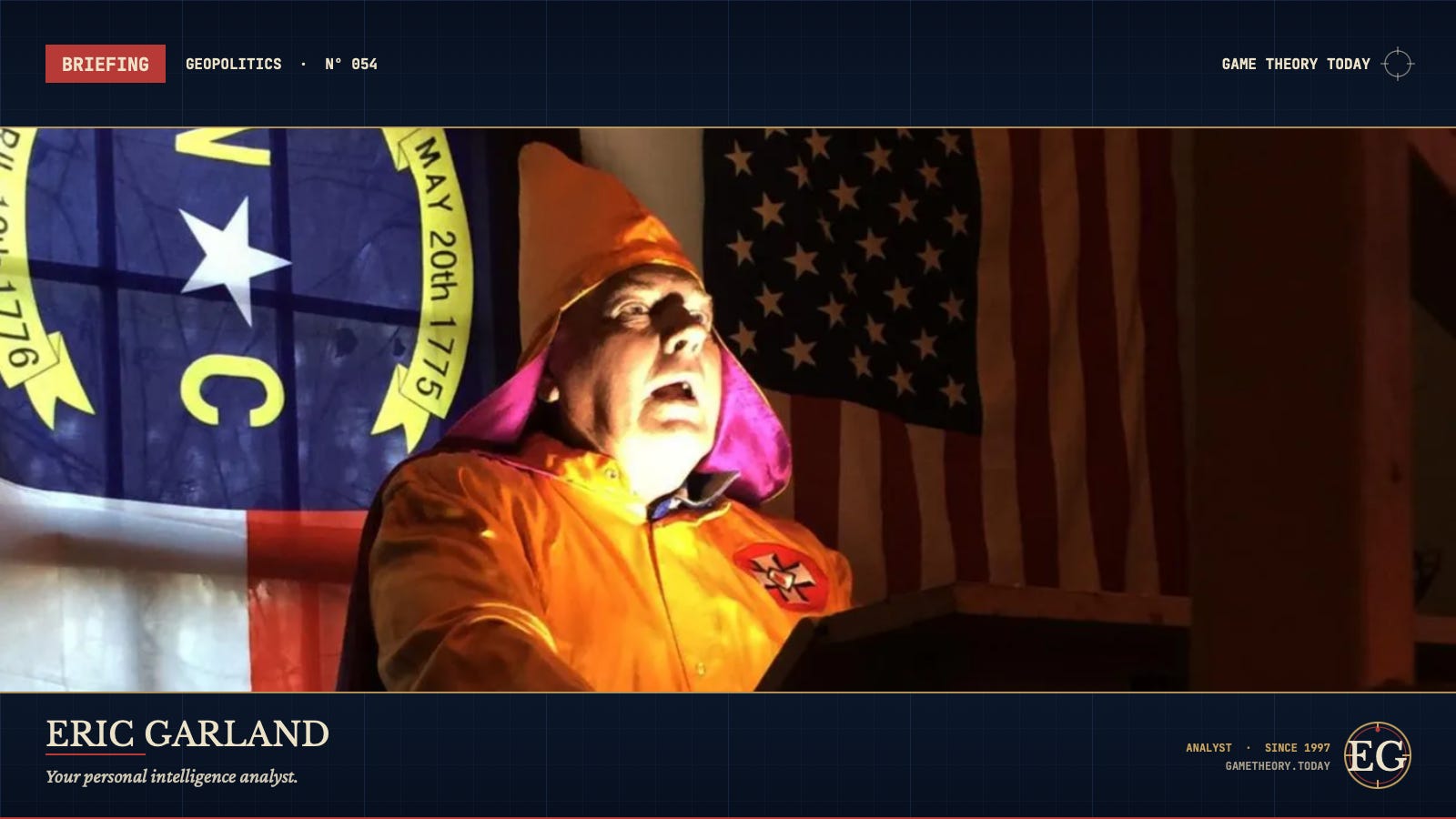
On April 21, 2026, a federal grand jury in Montgomery, Alabama returned an eleven-count indictment against the Southern Poverty Law Center. Wire fraud. False statements to a federally insured bank. Conspiracy to commit money laundering.
The press is covering the politics. The defenders are mounting a coalition. The critics are running a victory lap. None of them are asking the question that matters most.
Who taught a social-justice nonprofit how to run clandestine agent networks?
It matters because the answer points to a phenomenon the American public has been living with for at least sixty years without knowing it exists. A privatized active-measures industry, operating on American soil, in a regulatory void, frequently subsidized through the 501(c)(3) tax exemption — and almost entirely outside the accountability framework the American constitutional tradition was built to require for exactly this kind of operation.
I am going to walk you through the analytical logic in order.
First, what the indictment actually says.
Second, why the question of who trained these people is a matter of life and death for the operatives involved.
Third, the small, identifiable bench of professionals capable of running such an operation in the United States.
Fourth, the four other documented cases that establish the SPLC operation as one instance of a much larger industry.
Fifth, the historical and doctrinal frame — Felix Dzerzhinsky’s operational tradition, colonized into Benjamin Franklin’s civic institutions.
Sixth, the professional ethical standard against which the indictment can be read.
And seventh, the regulatory gap that has allowed all of this to operate for decades without congressional, judicial, or public scrutiny.
The argument is structural, not partisan. The cases I will discuss span the political spectrum — left-coded, right-coded, commercial, tabloid. The pattern is the same in every one of them.
What the indictment actually says
According to the Department of Justice’s announcement and the unsealed indictment, the SPLC ran a covert paid-informant program for approximately four decades, beginning in the 1980s. Between 2014 and 2023 alone, the organization secretly funneled more than three million dollars to eight informants who were either members of, or had infiltrated, violent extremist groups including the Ku Klux Klan, the National Alliance, the National Socialist Movement, the Aryan Nation, and the American Front.
The payment architecture is what gives the indictment its weight. Money flowed through a series of bank accounts in the names of fictitious entities — “Fox Photography,” “Rare Books Warehouse,” “Center Investigative Agency” — that allowed SPLC to disguise the source, control, and ultimate purpose of the funds. Internally, the operatives were known as field sources, or “the Fs.”
One field source operated inside the leadership of the National Alliance for approximately ten years and was paid more than a million dollars over that period. Another was a member of the online leadership chat group that planned the 2017 Unite the Right rally in Charlottesville, attending the rally at SPLC’s direction and helping coordinate transportation for other participants. He received approximately $270,000 over eight years. Another field source was the Imperial Wizard of the United Klans of America.
SPLC’s defense, articulated by interim CEO Bryan Fair, is that the program saved lives, that information from the program was often shared with local and federal law enforcement, and that the organization has discontinued the practice. The defense is not unreasonable on its face. Several former federal prosecutors have publicly questioned whether the indictment makes out the elements of the crimes charged. The case may collapse on the bank fraud counts under the Supreme Court’s recent Thompson v. United States decision narrowing the statute. The litigation will play out as it plays out.
But the case I want to make in this piece does not depend on the criminal indictment surviving. It depends on the operational facts that SPLC itself has acknowledged: that for approximately forty years, an American 501(c)(3) civil-rights nonprofit ran a privately-funded clandestine intelligence operation against American citizens on American soil, using fabricated identities, shell-company payment cutouts, and compartmented source handling. That much is on the record from both the indictment and the organization’s own response.
Whoever taught them to do this should have had specific professional credentials. The American public has a legitimate interest in knowing who, and how, and under what ethical framework. That is the question.
Running spies in lethal risk scenarios
I want to be clear about my own credentials and why they bear on this analysis. I am a Fellow of the Council of Competitive Intelligence. I have practiced human-intelligence collection and analysis since 1997 — almost thirty years. I have run agent networks. I have worked with sources whose exposure carried legal consequences for them and for me. I have been trained in the ethics, the tradecraft, and the legal architecture that govern this work in the private sector. I have spent decades inside the professional society that codifies and enforces those standards.
So when I read the SPLC indictment, I am reading it through a lens most journalists do not have available. And the question that lens immediately produces is operational rather than political.
You do not place an operative inside the leadership of the National Alliance for approximately ten years without losing them, unless someone who knows the craft is running the operation. The chance of grievous harm is as high as putting an agent inside of Hezbollah or the Chinese Triads or the Yakuza. You’re talking about the double-black-diamond runs of espionage.
The National Alliance was the most significant neo-Nazi organization in late-twentieth-century America. Its founder, William Pierce, wrote The Turner Diaries, the novel that directly inspired Timothy McVeigh’s bombing of the Murrah Federal Building in Oklahoma City — 168 dead. The organization’s Pacific Northwest leader, Robert Mathews, founded The Order, the white supremacist terrorist group that assassinated Jewish radio host Alan Berg in 1984. The operational environment SPLC’s field sources were placed into is one in which exposure carries lethal risk.
Ten years of survival inside that environment is not luck. It is—one assumes— professional tradecraft. And professional tradecraft has to come from somewhere specific.
The forensic question divides into two, because the SPLC operation required two distinct bodies of clandestine tradecraft.
The agents — the paid sources placed inside the extremist groups — required cover identity construction (what intelligence professionals call legends). Elicitation technique, to extract usable product without triggering the target group’s internal security. Operational security against the group’s counter-intelligence function — and these groups do have counter-intelligence functions, some of them surprisingly sophisticated. And a working analog of survival, evasion, resistance, and escape training, for the scenario in which cover collapses and the operative is detained by people whose recent history includes homicide against suspected informants.
That is not a weekend course. That is a curriculum developed over years, delivered by people who have done the work themselves, and whose pedagogy comes from a specific institutional lineage. It should ideally require years of training for the agents, if you expect them to survive the mission. Deep cover agents working for the government train for years in preparation for missions such as these.
The handlers — the case officers who recruited, ran, and protected the agents — required a different curriculum. Source recruitment and cultivation. Meeting and communication protocols designed to survive surveillance. Reporting discipline, so the analytical product is usable without compromising the source. Compartmentation, so exposure of one operative does not propagate to the program. Source protection across years of operation. And the specifically psychological discipline of handling assets whose moral character the handler finds repugnant, while maintaining a working relationship that produces intelligence.
Both curricula exist. Both are taught. In the United States, the teaching bench is small and the practitioners are identifiable — and most of them acquired the skills at taxpayer expense, with attendant legal restrictions on transferring them.
The professional pool capable of running an operation against violent domestic extremist groups is narrow. Former FBI undercover agents, particularly those who worked the Bureau’s domestic terrorism units in the 1990s and 2000s, when white supremacist penetration was a federal priority. Former ATF, whose institutional history against these groups predates the FBI’s and produced some of the most experienced domestic undercover operators in American law enforcement. Less likely but possible: former state and local police intelligence with federal task force exposure. Even less likely: former military human-intelligence operators, who would be operating under significant nondisclosure constraints. And finally a small, mostly invisible private-sector bench of credentialed operators who train corporate clients and investigative journalists.
I am in that last category, and I know most of the people like me on a first-name basis. The people who could have done the SPLC training in a legitimate way are identifiable. They have professional histories. Many are members of credentialed professional bodies that maintain records of their membership. I am on the grid. Anyone else reputable would be too.
So the central question takes a specific shape. Did SPLC have a credentialed human-intelligence professional on staff as a handler? Did it retain one as a consultant? Did it contract with a training firm? Who? Where were they from?
The indictment does not say. The reporting has not asked. The answer is material to understanding the scope of what was operating on American soil. And under a 501(c)(3) structure that publishes its senior staff on Form 990 every year, the answer is obtainable from public records.
This is not a classified question. It is a research problem.
The private espionage industry nobody told you about
Before I go further, I want to make clear that the SPLC operation is not a one-off. SPLC is the most recently documented case in a pattern that has been building for at least sixty years. I want to walk through four other documented cases briefly, because the scale of the phenomenon does not become visible until they are placed alongside one another.
The Anti-Defamation League, 1960–1993. In late 1992 and early 1993, an FBI investigation uncovered a domestic intelligence operation that the ADL had been running for more than thirty years. The principal operative was Roy Bullock, a San Francisco art dealer who had served as am FBI informant since 1957 and had been on ADL’s payroll since the 1960s, using his collectibles store as cover. Bullock’s principal source inside law enforcement was a San Francisco Police Department inspector named Tom Gerard, a former CIA contract employee whose work had reportedly included training Salvadoran security forces — when investigators later searched Gerard’s locker after his flight to the Philippines, they found a black executioner’s hood, photographs of bound and blindfolded men, CIA manuals, and a document on interrogation techniques stamped “secret” and referencing El Salvador.
Bullock and Gerard’s files contained intelligence on approximately twelve thousand individuals and nine hundred and fifty organizations. Targets included Arab-American activists, anti-apartheid organizations, the NAACP, the ACLU, Greenpeace, the United Farm Workers, the American Indian Movement, and Representative Ron Dellums of California, who chaired the House Armed Services Committee. ADL paid Bullock through a Los Angeles bank account held in a fabricated name, routed through a Beverly Hills attorney as the cutout. Some of the resulting intelligence product was sold to the apartheid government of South Africa for sixteen thousand dollars — by a private American nonprofit, to a regime then under international sanction for crimes against humanity.
When the operation was exposed, ADL’s defense in court was that Bullock and his colleagues should be recognized as journalists, protected by the First Amendment. The defense partially succeeded — limiting discovery enough to fold the case. The 1999 class-action settlement closed the matter for one hundred and seventy-five thousand dollars in plaintiff legal fees, twenty-five thousand to a community relations fund, a permanent injunction against future spying, and no admission of wrongdoing.
This is the template. Tax-exempt nonprofit cover. Cutout payment laundering through a false-name account and an attorney. Corrupt police network as source. Foreign-government information transfer. Journalist defense to block discovery. Thirty-plus years of operation. Targets across the American political spectrum. Minimal legal consequences when exposed.
Black Cube and Harvey Weinstein, 2016–2017. Black Cube is an Israeli commercial intelligence firm founded in 2010 by former IDF military intelligence officers, with an international advisory board that included two former heads of Mossad. Harvey Weinstein retained Black Cube in 2016 — on a referral from former Israeli prime minister Ehud Barak, who was at the time in the middle of a fifteen-year close personal and business relationship with Jeffrey Epstein — for the explicit contractual purpose of suppressing sexual-misconduct allegations.
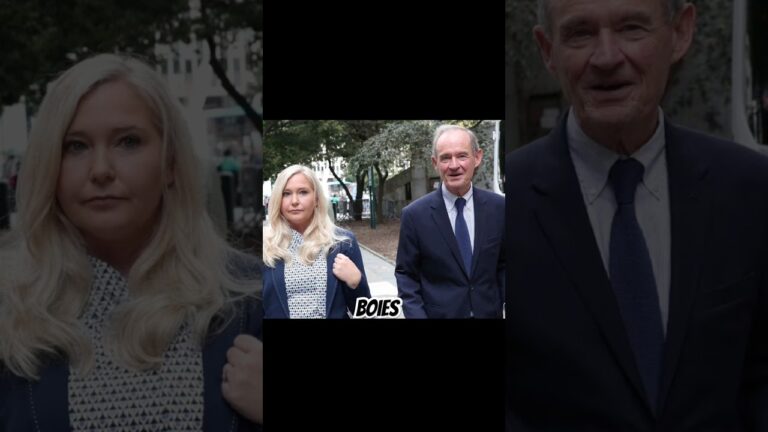
One of Black Cube’s operatives, using the alias “Diana Filip,” spent months posing as a women’s-rights advocate to elicit and secretly record the actress Rose McGowan. The intelligence product was routed through the law firm of David Boies — through attorney-client privilege as an intelligence cover vehicle.
Yes: the same David Boies who has separately represented Jeffrey Epstein’s victims also retained a commercial intelligence firm staffed by former Mossad officers, recommended by an Epstein associate, to run clandestine operations against American citizens on American soil — and benefited from attorney-client privilege while doing it.
Take a moment with that fact pattern. This is not deposition. This is not discovery. This is a law firm acting as a front for clandestine intelligence operations, conducted by operators trained in the tradecraft of a foreign service, against the documented victims of crimes — and shielded by a privilege the framers of American legal practice never contemplated being used this way.
The category is crime and espionage. The victims are documented, real, and named — Rose McGowan, Harvey Weinstein’s accusers, eventually Jeffrey Epstein’s. What we are tracking is the industry that gets retained to suppress documentation of crimes against them.
Erik Prince, Richard Seddon, and Project Veritas, 2016–2018. Richard Seddon is a former British MI6 officer. Erik Prince recruited him in 2016 and brought him to the Prince family ranch in Wyoming to train Project Veritas operatives in surveillance and elicitation. Seddon ran a 2017 operation to infiltrate a Michigan chapter of a major teachers’ union. He ran a separate 2018 operation to place an operative inside Abigail Spanberger’s Democratic congressional campaign in Virginia. This is on-the-record reporting from the New York Times. The trainer was a former foreign-intelligence officer. The targets were American civic institutions and an American electoral campaign. The regulatory framework did not cover any of it.
Southern Investigations and the News of the World, 1984–2011. Jonathan Rees ran a London private investigation firm called Southern Investigations from the 1980s onward. At peak, he was on retainer to Rupert Murdoch’s News of the World for one hundred and fifty thousand pounds a year. He operated a network of corrupt police officers, tax officials, and bank employees who supplied confidential information on tabloid targets — politicians, celebrities, the royal family, and in at least one documented case the family of a murdered thirteen-year-old girl.
In 1999, British anti-corruption police secretly recorded Rees explaining to a journalist why their invoices had to stay vague:
“This is tiresome, fucking tiresome. We are not going to put the numbers in there because what we are doing is illegal, isn’t it? I don’t want people coming in and nicking us for a criminal offence.”
The quiet part, out loud, on a live wiretap. Rees went to prison in 2000 for conspiring to plant cocaine on a woman to discredit her in a child custody case. After prison, the News of the World rehired him.
Five cases. Different political profiles — SPLC left-coded, ADL a Jewish civil-rights institution traditionally aligned with the liberal mainstream, Project Veritas right-coded, Black Cube foreign mercenaries, Southern Investigations tabloid commercial. Different targets — extremist groups, civil rights and anti-apartheid organizations, sexual-misconduct accusers, political campaigns, celebrities, the royal family.
One structural pattern: private entities using intelligence-service tradecraft against civilians in the West, inside a regulatory void that existing law was never designed to govern.
The Dzerzhinsky inversion
Felix Dzerzhinsky founded the Cheka, the Soviet counter-revolutionary secret police, for Vladimir Lenin—a terrifying structure which eventually became the KGB and its successor agencies. Modern Russian intelligence officers still call themselves Chekists, after the agency he founded. Russian spies still collect their pay on the eleventh of each month, in honor of his birthday—which happens to be September 11.
Dzerzhinsky borrowed his tactics from the Okhrana, the tsars’ secret police. His operational doctrine — political-warfare intelligence, agent handling, active measures, narrative manipulation for political purposes — became the foundation of Soviet intelligence practice and, through the legacy of Service A of the First Chief Directorate, the doctrinal basis for state-run political-warfare operations across the second half of the twentieth century.
In Russia, the home of the Chekists, there is no distinction between home soil and foreign soil. Literally the same officers conduct the same operations against all populations, including Russian citizens. They recognize nothing special about home soil. If you are alive, you are a potential target for the Chekists.
America was supposed to be completely different.
In America, clandestine intelligence operations on our own soil have a defined lawful lane. Federal government. Statutorily authorized. Supervised under executive order. Congressional intelligence committee oversight. Judicial review where applicable. Inspector general accountability. That framework exists because the American constitutional tradition understood that clandestine domestic operations against citizens are dangerous enough to a republic that they must be constrained by layered accountability — or not conducted at all.
Operations conducted outside that framework are not a regulatory edge case. They are hostile intelligence activity by category. The regimes that have historically run clandestine intelligence operations against their own populations as a matter of state practice are a specific list: the Soviet Union, East Germany, North Korea, Cuba. That is the category. When a private American entity runs clandestine operations against Americans, it has placed itself inside a category the American constitutional tradition was designed to exclude.
Active measures. Aktivnye meropriyatiya. The fact that we borrowed the term from the Soviets, and not the other way around, tells the story. These are not operations designed to collect information for decision-makers. They are operations designed to shape the political environment itself. To discredit adversaries. Construct narratives. Manufacture political outcomes.
In the Soviet system, active measures were a state function. Department A of the First Chief Directorate. Accountable nominally to the Politburo. Owned, at least on paper, by the political institution that authorized them.
What has emerged on American soil over the last three decades is something the Soviet doctrine could not have predicted. A privatized active-measures industry. Commercial firms, nonprofits, tabloids, and political operators running the same tradecraft Dzerzhinsky’s successors spent decades perfecting — but under private ownership, without state authorization, without Politburo oversight, without any oversight institution at all. The tradecraft traveled through supposedly retired practitioners into a commercial market. The market absorbed it. The American regulatory framework never updated.
This is Benjamin Franklin’s civic institutions colonized by Felix Dzerzhinsky’s operational doctrine. The newsroom still looks like a newsroom. The civil-rights nonprofit still looks like a civil-rights nonprofit. The law firm still looks like a law firm. But the tradecraft inside is political-police tradecraft, rented commercially and deployed against other Americans.
This new analytical category is privatized active measures. The category does not exist robustly in the Soviet doctrinal literature, because the Soviets could not conceive of privatizing the function. It does not exist robustly in American law, because American law was written when the function did not exist commercially. Thomas Rid, in his 2020 book Active Measures, traces the doctrinal lineage through the Comintern and Department A. Wang Huning, the Chinese political theorist, in his 1991 book America Against America, identifies the structural vulnerability: the American market absorbs capacities that ought to be held as public responsibilities, and the regulatory frameworks do not catch up.
We are living in the world Wang predicted.
The professional ethical standard matters
The Society of Competitive Intelligence Professionals has a code of ethics. The portions that bear on this analysis are specific and worth knowing.
The code requires accurate self-identification when collecting information. No pretext identities. No fabricated personas. The code requires documented sourcing — if you cannot point to where your information came from, you cannot use it. The code forbids methods that create criminal or civil liability for collectors or for sources.
These standards exist because the profession understood, decades ago, that human-intelligence tradecraft applied without ethical framework becomes corporate espionage, political warfare, or worse. We learned our craft from the CIA and the FBI, but we have no legal right to treat Americans the way the CIA treats the Syrian government. The standards we codify, discuss, and enforce as a profession are what distinguish legitimate private-sector intelligence work from the industry I have been describing in this piece. Several practitioners have been caught violating these standards over the years. When they are caught, every member of the profession knows about it within twenty-four hours (spooks are a gossipy bunch) and the violator is barred from the discipline for life. There are no exceptions. The profession could not function with rogues running around making us look like crooks — or, far worse, like hostile-service operatives.
Now read the SPLC indictment through that ethical lens.
Fabricated cover identities. Operatives placed in lethal-risk environments without donor disclosure. Donor funds used for a program donors were never told existed — and under a tax-exempt structure, that means the public subsidized the program through foregone tax revenue. Each of these is a specific, documented departure from the practices that legitimate private-sector human intelligence requires of itself.
That is what makes the who-taught-them question forensic rather than rhetorical. If a credentialed human-intelligence professional was on staff at SPLC’s Intelligence Project, that person’s professional obligations were in direct conflict with the program they were running, and the profession has a legitimate institutional interest in knowing who and how. If no such professional was on staff, the operational-security failure explains a great deal about why the indictment reads the way it does — and it means a tax-exempt organization put agents into lethal-risk environments without professional protection, using subsidized dollars, for almost forty years.
Either answer is material. The people who could answer are identifiable from public records. Form 990 filings list senior staff and compensation. Intelligence Project leadership across the period in question is in the public domain. Board members are disclosed. Retained consultancies appear on Schedule O. The work has not been done. The reporting has not asked the question. The indictment does not answer it.
Strategic implications
There are three sets of implications that come to mind.
First, let’s go to the Godfather of intelligence analysis. Richards Heuer, in Psychology of Intelligence Analysis, writes about absence of evidence as evidence. If a legitimate American human-intelligence professional were publicly associated with SPLC’s Intelligence Project, we would expect to see that person in conference programs, in peer citations, in published work on domestic-extremism methodology. The absence of any such figure in the public record is itself a piece of analytical data. It is consistent with two hypotheses: either the handlers were federal or ex-federal operators whose public affiliation with the program was deliberately suppressed, or there was no credentialed handler and the program ran without professional oversight.
There is also a third possibility, more disturbing than either: the handlers were outside the American constitutional tradition entirely — non-U.S. nationals, or U.S. nationals trained in the tradecraft traditions of hostile services, running operations the American framework never authorized because the framework was designed to exclude exactly this kind of operation.
Second, the regulatory frame. The Foreign Agents Registration Act was written for a different world. It is specifically for propaganda deployed at the request of a foreign principal. It does not cover American-domiciled entities that retain former foreign-intelligence officers — or their training lineage — to apply their tradecraft against American citizens on behalf of domestic principals. FARA requires tasking from a foreign principal for federal law enforcement to have jurisdiction. The tradecraft itself is not expressly outlawed when employed by Americans against other Americans. That is the regulatory gap. The entire industry I have described in this piece operates inside that gap, and the gap has been growing for thirty years while nobody was looking for it.
Third, the fiscal frame. The 501(c)(3) tax exemption is a public subsidy. Under the tax code, the public underwrites nonprofit operations through foregone tax revenue. That subsidy carries transparency obligations. An organization running a privately-funded clandestine intelligence program — using methods that fail the professional ethical standard, inside a regulatory void that FARA does not cover, at public expense through the tax code — owes the American people a full accounting of who ran it, who was trained for it, and under what ethical framework. That accounting has not been provided. The indictment does not force it. Congressional oversight has not forced it. But the American public has a legitimate claim on the information, and it is ultimately obtainable.
Democratic accountability requires the capacity to see institutions clearly. You cannot hold accountable what you cannot perceive.
What this means
The federal indictment told us what the Southern Poverty Law Center is alleged to have done. It did not tell us who taught them how. That is the angle no other commentator has handled, and it is the angle that — when handled — unlocks the rest of the story. The industry. The regulatory gap. The Dzerzhinsky doctrine operating quietly on Benjamin Franklin’s soil for decades, in plain sight, subsidized by the American public, against the American public.
The SPLC may have been running a private clandestine intelligence operation under the cover of a racial-equity nonprofit. You might agree that sounds anti-American.
We should find out if it is literally non-American.
Keep thinking.
Eric Garland is a Fellow of the Council of Competitive Intelligence and the principal of Competitive Futures, a strategic intelligence and foresight firm founded in 2002. He has briefed Fortune 500 executives, the U.S. Intelligence Community, the Wall Street Journal CEO Summit, and H.S.H. Prince Albert II of Monaco. In May 2022, the Russian Federation personally sanctioned him for his open-source analytical work on Russian intelligence operations against American democratic institutions. He is the author of Future, Inc. (AMACOM, 2007) and How to Predict the Future…and WIN! (2011).
Game Theory Today is on YouTube and TikTok.
First published on Game Theory Today (Substack), April 25, 2026.